Abeka vs BJU Press
Abeka and BJU Press publish Christian textbooks and video courses. Here is how they differ from each other, and from a curriculum written for your child.
The three side by side
Abeka and BJU Press both sell Christian textbooks for a parent to teach from, as well as recorded lessons from their teachers. Abeka Academy also offers school enrollment; BJU Press video courses are used within the family's homeschool.
With either publisher, the family chooses a published course level; our placement checks each subject before lessons begin.
| Category | TheHomeschoolingCompany | Abeka | BJU Press |
|---|---|---|---|
| Format | Interactive articles written for your child, with a mentor beside each one | Parent-led textbook kits, or recorded video lessons through Abeka Academy | Textbook kits, or streamed video courses on the Homeschool Hub |
| Choosing a level | Current skills, measured before the first lesson | Parents choose their starting grade | Parents choose a grade; free math placement tests help |
| Daily schedule | No class times; you shape the weekly plan around your family | Recorded Academy lessons follow the publisher's sequence | Video lessons run about 2.5 to 3.5 hours a day, by grade |
| Grading | We grade each piece of work as it arrives | Parents grade with answer keys; Academy families send required work and wait for high school exam grades | Online tests and quizzes graded automatically from Grade 5 |
| Records | Attendance, state documents, and a transcript built from saved work | Academy enrollment keeps report cards, transcripts, and a diploma | The family keeps its homeschool record, with online scores in the Homeschool Hub |
| Faith | Religious only if you choose, as a custom elective or woven through any subject | Christian perspective, with Bible as a subject | Taught from a biblical worldview |
When subjects need different levels
Your child can revisit decimal division while continuing ahead in reading, without buying another kit to change levels. Placement finds the starting skills in each subject.
A school day with us
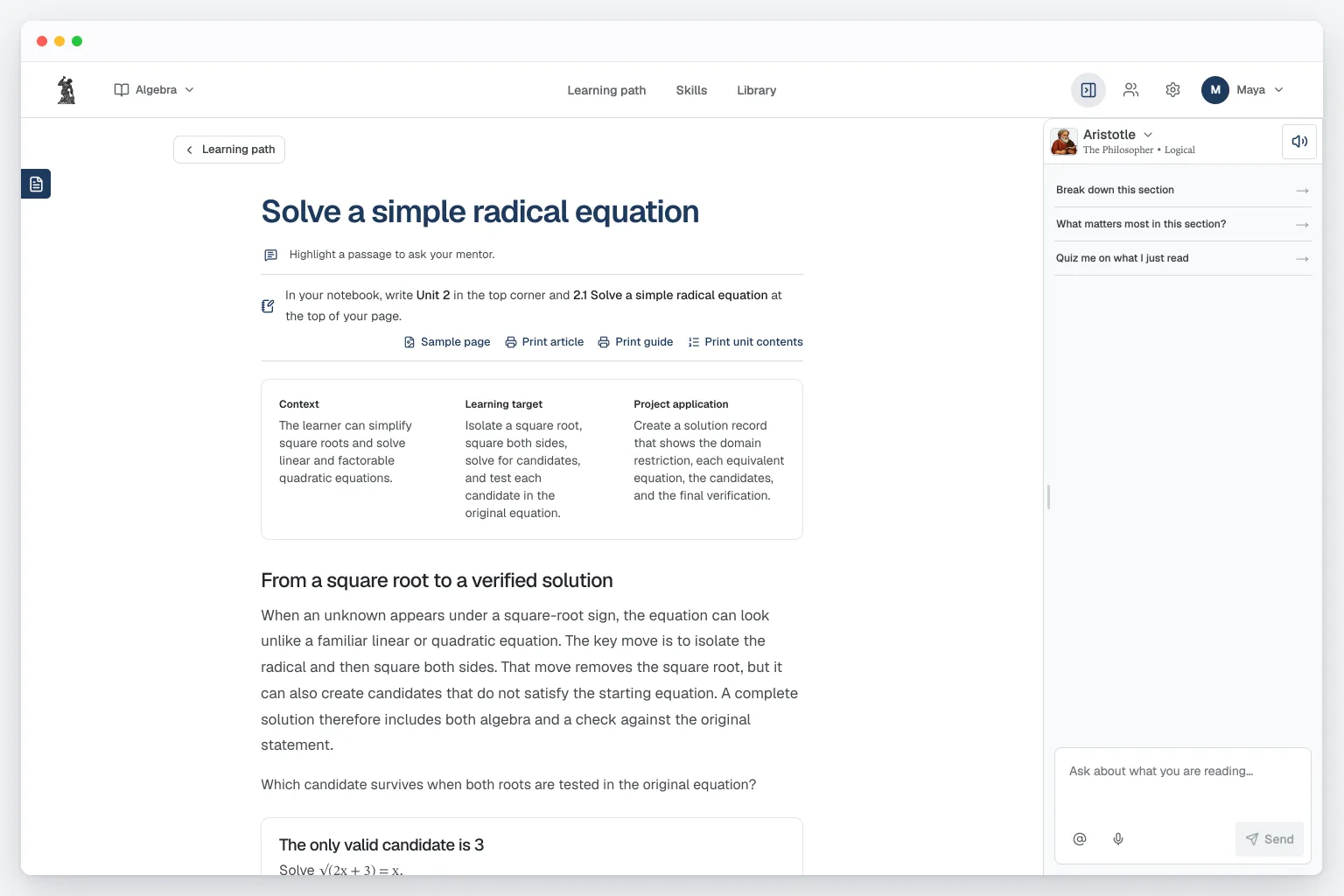
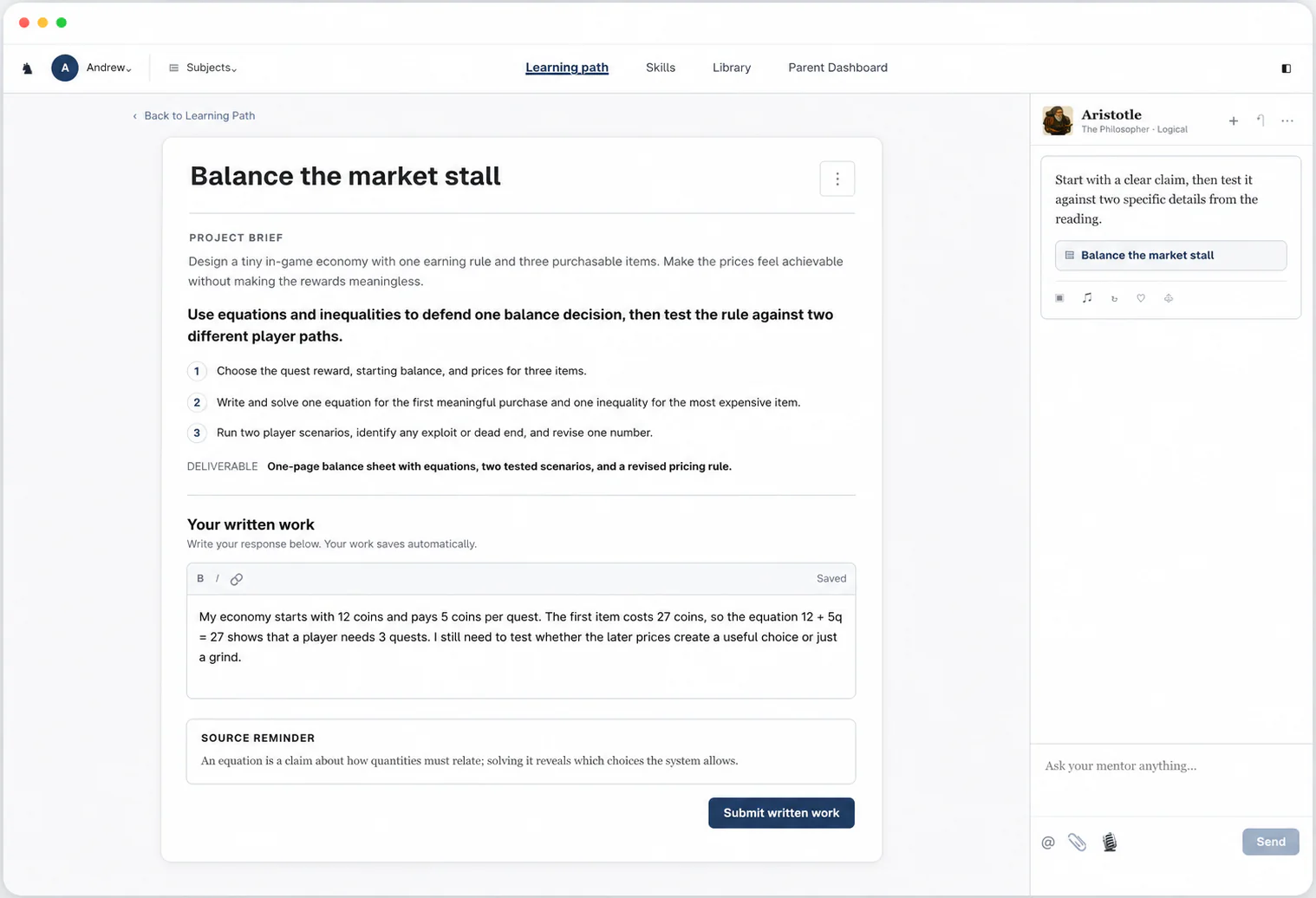
In an algebra project, your child can design a tiny game economy, test prices against two player paths, and revise a price. The equations have to support the decision. Readings and checks teach the ideas before the project, on a weekly plan your family can adjust.
Follow-up questions and written feedback
If a book or recorded class leaves a question unanswered, your child can take it to our Always-On Mentor. They can discuss the explanation and follow up on the reply during the lesson.
Our grading includes written projects and explanations as soon as they are submitted. Feedback shows your child what needs revision.
A transcript from completed coursework
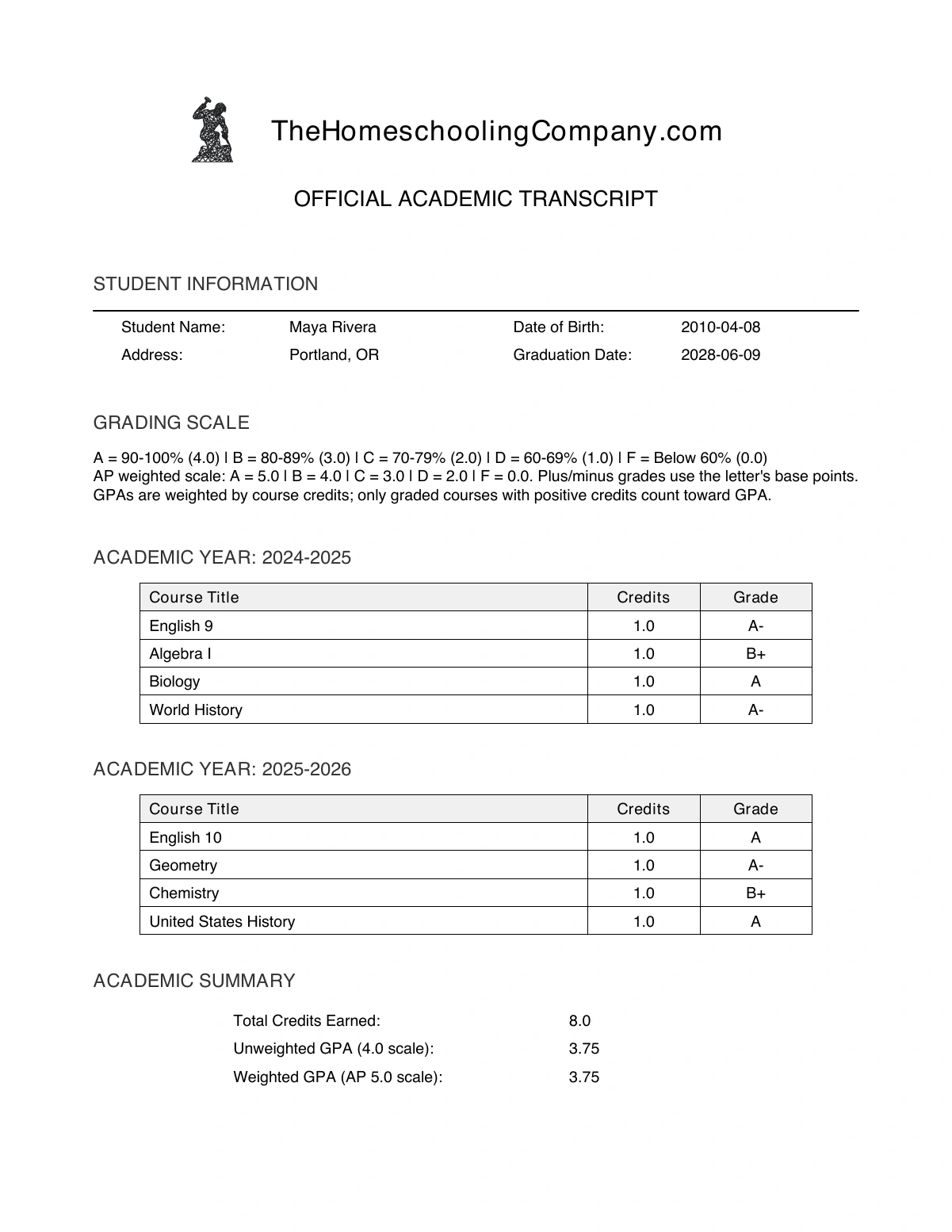
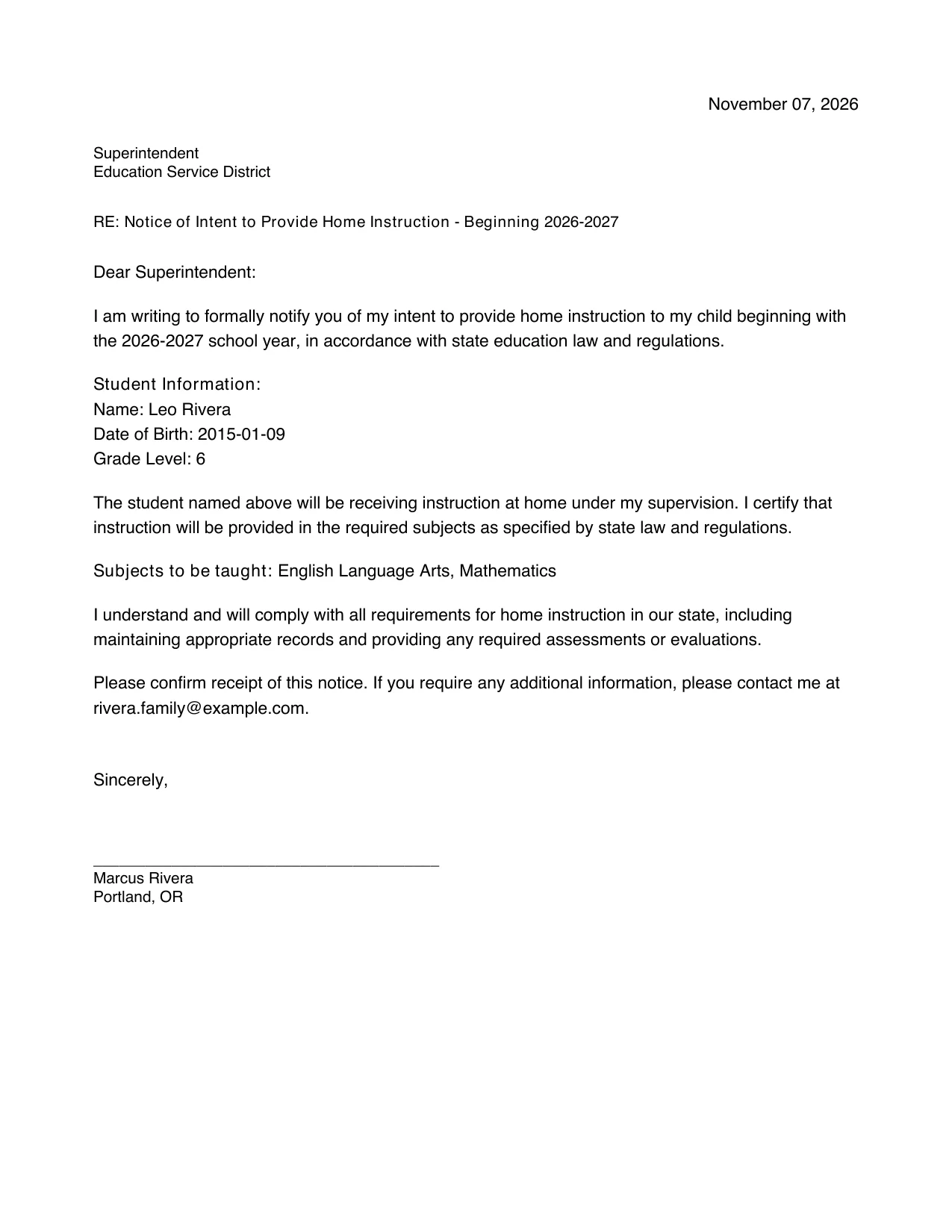
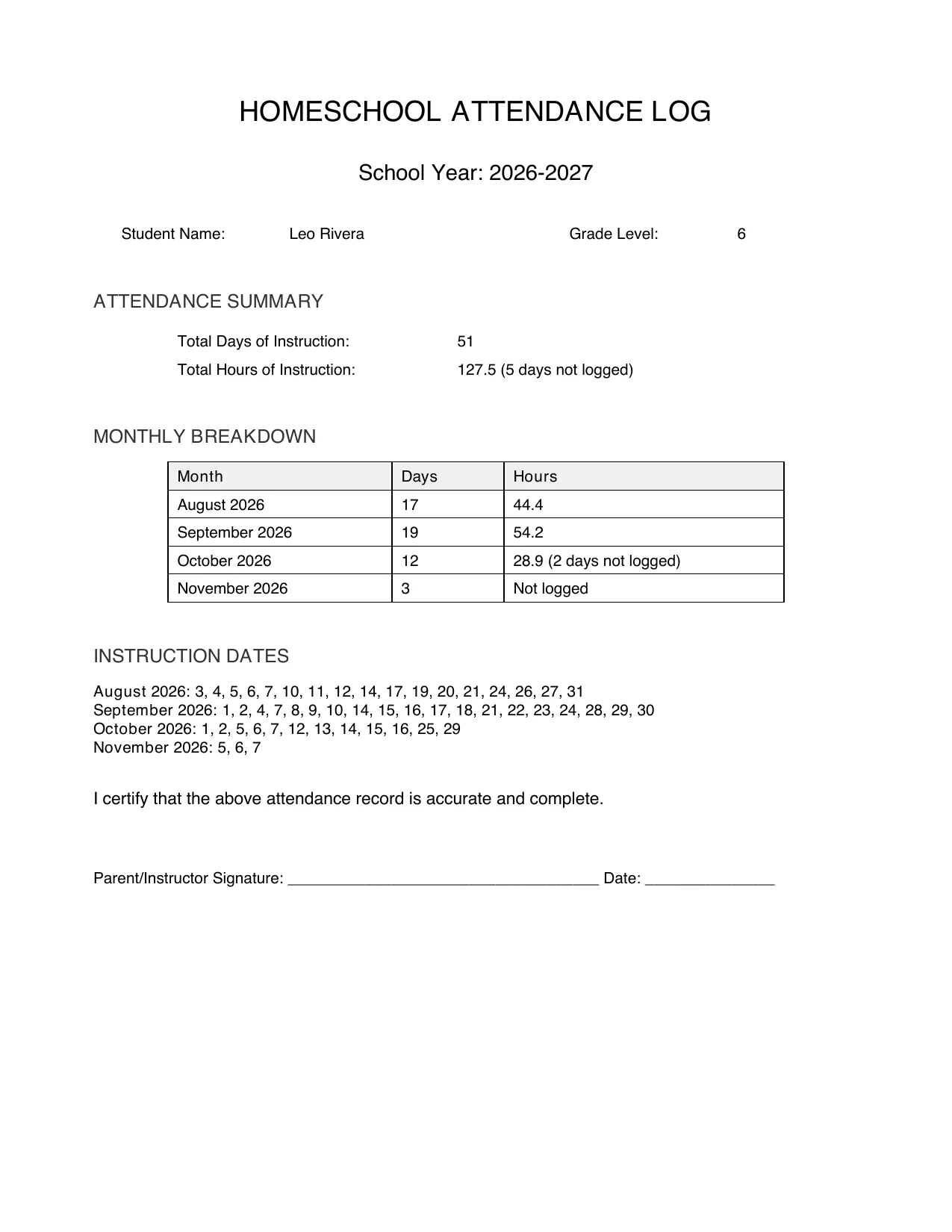
Abeka Academy keeps records for its enrolled students; our records come with the courses. We generate learning summaries, portfolios, and state document drafts from saved assignments and grades. For high school, completed coursework supplies the credits and GPA on a transcript you sign as homeschool administrator.
Keeping faith in your school day
A Bible elective here has its own assignments and grades. Adding faith as an interest instead changes the examples within chosen subjects. Your children can make different choices without needing different publishers for their core courses.
Other questions
- Do I need to buy textbooks for your courses?
- No. Our lessons are on screen, with a Print / PDF button on every reading. A few projects list physical materials with the assignment.
- Can a child who is not reading yet use your curriculum?
- Yes. Kindergarten through Grade 2 is spoken: your child listens, answers out loud, and an adult stays nearby.
- Can ESA funds pay for your curriculum?
- Yes, in Arizona, Alabama, New Hampshire, and Utah, where we are an approved vendor. Your program decides which purchases qualify. ESA payment steps
Try a lesson before choosing your curriculum
See how your child learns from a written lesson and uses its ideas in a project, with questions and grading handled in the course.
$149/month per child after the trial.