The best homeschool field trips connect to something your child is learning. Here are ideas by subject, free and cheap passes, and how to get more from a visit.
What makes a field trip worth taking
A field trip is worth the drive when your child arrives with a question and leaves with an answer they could not have gotten from a page. The trip does not need a worksheet.
It needs a reason: a river your child just read about, a period of history they are in the middle of, a job they have wondered about.
Homeschoolers have one big advantage here. Weekday visits are open to you, and with no class schedule to return to, a trip can take as long as your child's curiosity lasts.
Ideas by subject
Almost every town has more teaching places than families use. Start with what your child is studying, then look for the place where it happens for real:
- Life science: a nature center, aquarium, zoo, farm, or tide pool, where your child sees the living systems their lessons describe.
- Earth and space science: a river or creek after a storm, a quarry overlook, a planetarium, or a weather station open to visitors.
- Chemistry and engineering: a water treatment plant, a bakery, a factory's public tour, or a makerspace open day.
- History: a historic house, a battlefield, a pioneer cemetery, or the local history museum, matched to the period your child is in.
- Civics: a city council meeting, a courtroom open to the public, or a state capitol tour; a teen can watch a session of the legislature.
- Math and money: a grocery store with a budget, a hardware store to price a project, a bank, or a farm stand where weights and prices are real.
- Art and music: an art museum, a gallery opening, an open rehearsal, or a craftsperson's workshop.
- Work and careers: a fire station, a vet clinic, a newspaper, a construction site viewing area, or a small business whose owner will talk for twenty minutes.
Free and low-cost passes
Field trips do not have to be expensive. A few programs are worth knowing about:
- Every Kid Outdoors: a fourth grader, or a homeschooled child at the fourth-grade equivalent, can print a paper pass that brings them, their family, and friends into federal parks, lands, and waters free for a full year. Not every site accepts the paper pass, so call ahead.
- Junior Ranger: many national park sites run free Junior Ranger programs, with activity booklets mostly aimed at ages 5 to 14 but open to anyone. Some can be done online or downloaded before you go.
- Science center reciprocity: members of a science center in the ASTC Travel Passport Program get free general admission at participating centers more than 90 miles from both their home and their home center.
- Homeschool days and group rates: many museums and historic sites run homeschool days or offer group rates, and a call ahead can get a short tour from staff.
- Free days and your library: many museums have free admission days, and it is worth asking your library whether it lends museum passes.
Getting more out of a visit
A little preparation turns an outing into learning that sticks. Before you go, pick one question from something your child is studying, such as why a river bends where it does or why a fort was built on that hill, and let them watch for the answer.
At the site, give each child a job that fits their age. A younger child can name, count, or sketch what they see; an older one can take notes, photograph details for later, or interview a staff member. Mixed ages on one trip work well this way, because each child has something to do.
Afterward, talk about it on the drive home. If a trip sparks a real passion, it can become a course: with School in a Box, our full plan of up to 12 subjects at once, your child can add any topic, from bridges to beekeeping, as a custom elective with its own path of lessons.
Field trips with other families
Group trips are cheaper and more fun. Homeschool groups and co-ops often organize a trip a month, and a group can meet the minimum many sites set for a guided tour or group rate. Our guide to homeschool co-ops covers how to find one.
If you are planning a group trip yourself, call the site a few weeks ahead, ask about group size limits and chaperone ratios, and find out whether staff can tailor the tour to the ages coming.
Do field trips count as school days?
That depends on your state, because states count school time differently. Some ask for no attendance records at all. Pennsylvania asks for 180 days of instruction, or 900 hours a year in kindergarten through sixth grade and 990 in seventh through twelfth. New York asks for the equivalent of 180 days, at 900 or 990 hours a year.
Whether a trip counts toward days or hours depends on how your state defines instruction. Our requirements checker shows your state's rule.
Our attendance record counts the days and minutes your child spends in lessons with us. Your child checks in once a day and their activity keeps the session open, so a trip day where they also do a lesson block is counted for that block; the trip itself is not part of our record.
How school fits around a trip day
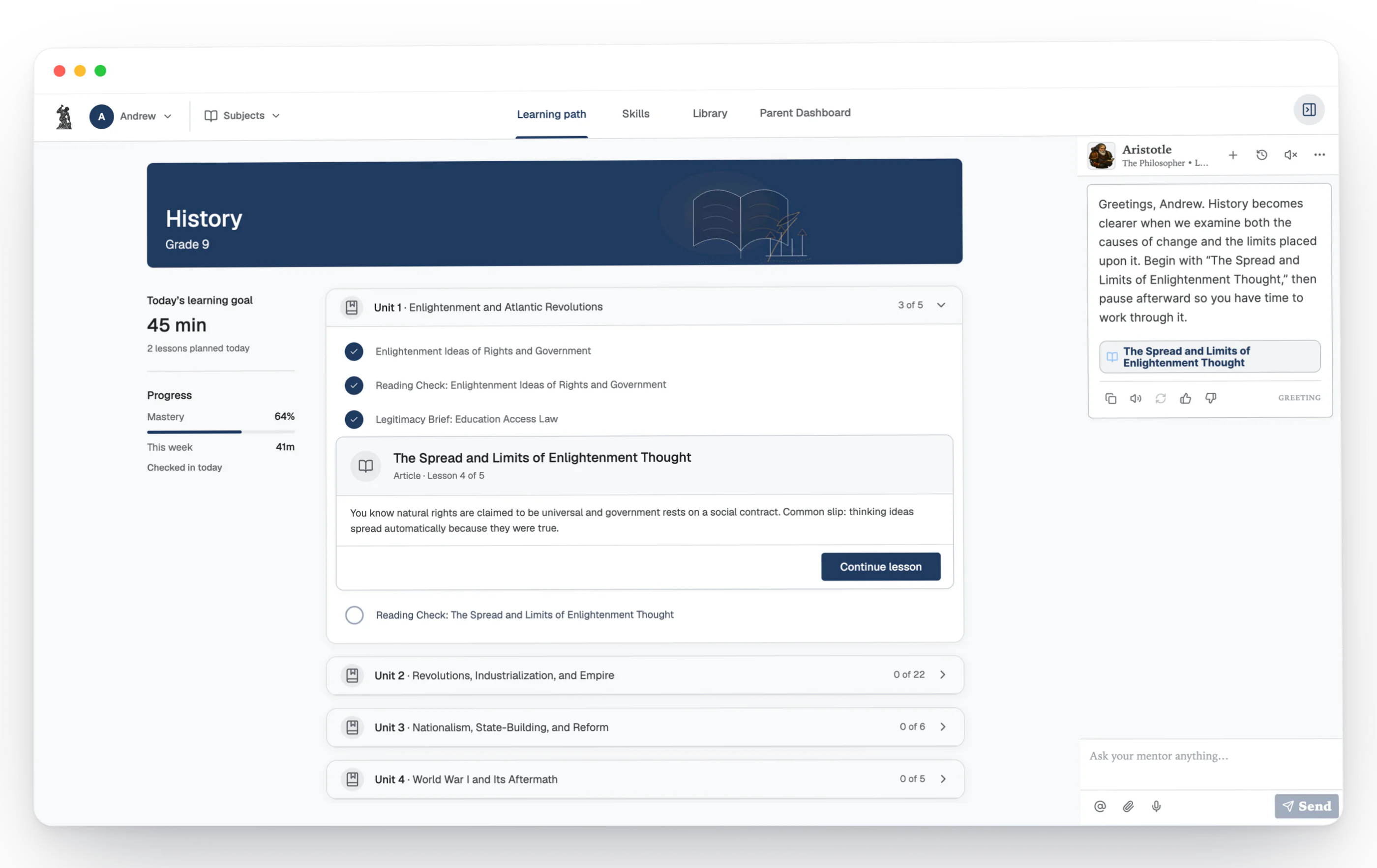
Here, there are no live class times, so a trip never makes your child miss a class. In our Parent Dashboard, the weekly schedule fills the week with blocks across your child's subjects from the school days, start time, and daily minutes you choose, and any block can be moved.
A trip day can skip lessons entirely, or keep a short block in the morning before you leave.
We prepare the lessons and grade the coursework for the days between trips. You can spend that planning time choosing a place your child wants to explore.
Frequently asked questions
- Are virtual field trips worth it?
- For a rainy day or a place too far to visit, yes. Some Junior Ranger programs run online, and many parks and museums publish virtual tours.
- How often should we take field trips?
- As often as they stay fun. Many families aim for one or two a month, more in spring and fall, when outdoor sites are at their best.
- Do I need a teacher ID for educator discounts?
- Policies vary by site. Some accept a homeschool letter of intent or a membership card from a homeschool group; ask when you book.
Any weekday can be a trip day
Lessons have no class times, so the week bends around the trips your child will remember.
$149/month per child after the trial.