Homeschool methods differ in who plans, who teaches, and how learning is checked. Here is how we answer each question, and what your state actually requires.
How we homeschool, and what separates one method from another
Our approach starts with your child, not a philosophy. Each subject begins with placement, a short adaptive test that sets the grade where each subject starts and skips what your child already knows. Every lesson is built around your child, with help inside it. Projects ask your child to make something real, and every piece of work is graded.
You choose the subjects and the hours; we do the planning, teaching, grading, and records.
If you searched for homeschool methods, you have probably met names such as classical, Charlotte Mason, Montessori, Waldorf, unit studies, eclectic, and unschooling.
Whatever the label, a method is a set of answers to the same few questions: who decides what comes next, how a lesson teaches, how much your child reads and makes, how anyone knows the learning happened, and how much of it the parent carries. Those questions decide your child's year, so this guide compares on them.
Who decides what comes next
Some approaches follow a fixed order of skills; others follow the child's curiosity from week to week. The risk on one side is a sequence that ignores what your child already knows. The risk on the other is a gap nobody notices until a later topic depends on it.
Each subject is a path of units in a set order, so no skill is skipped, and placement starts the path where your child actually is. A child can start math a grade ahead and writing a grade behind.
Your child moves forward by showing each skill, and review checkpoints come back at least every three lesson groups, so earlier skills are checked again after time has passed.
Your child's curiosity still has room: on School in a Box, our full plan with up to 12 subjects at once, they can take a custom elective on anything they love, built as a full course.
How a lesson teaches
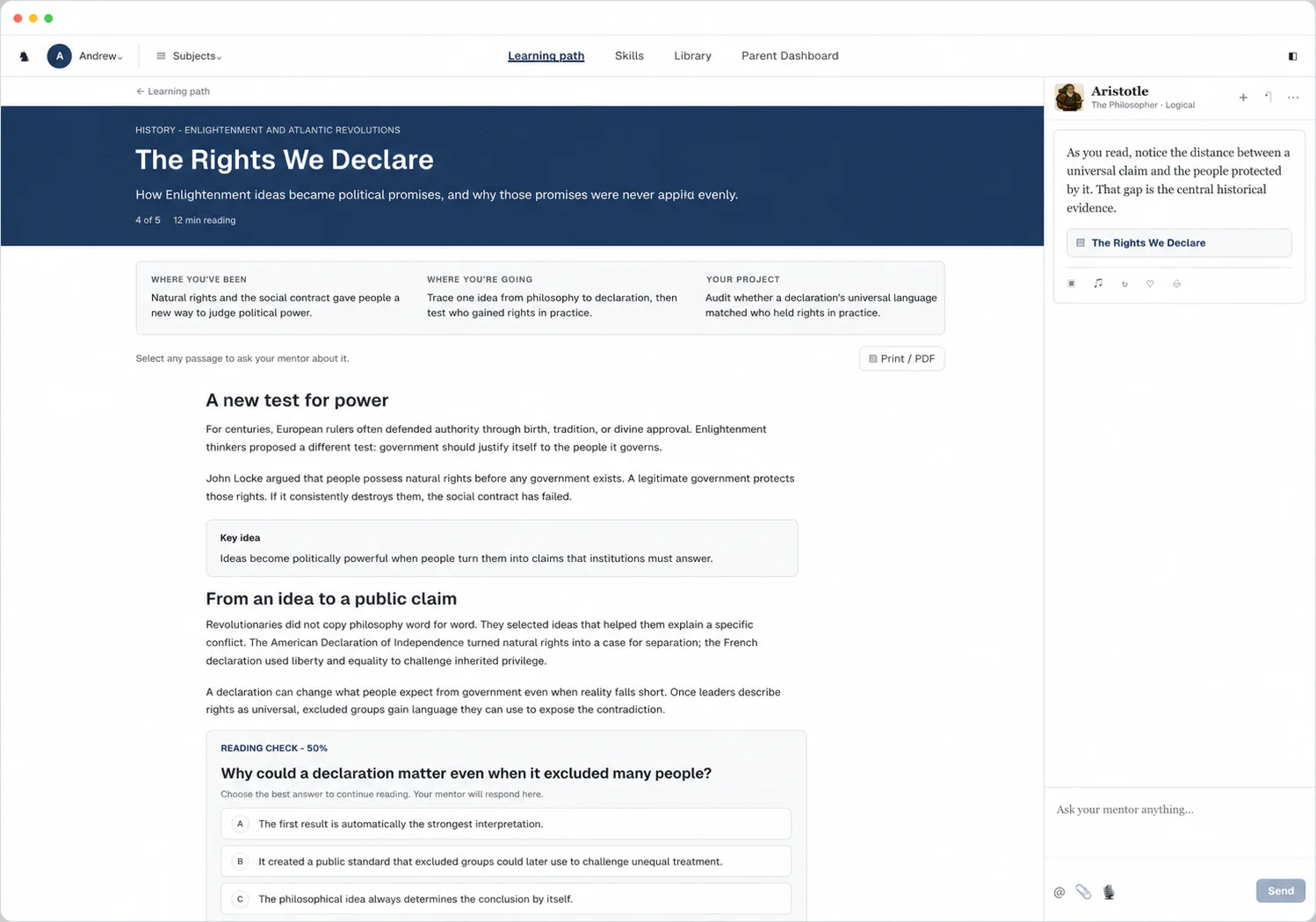
Each lesson is an interactive article written for your child, with images and videos made for them and its reading time at the top. It opens with where your child has been, where the lesson is going, and the project it leads to.
The article weaves in your child's interests, so a child who loves horses might meet ratios through feed and weight, while the definitions stay plain and the skill stays the point.
Notes in the margin connect the idea to what your child learned before, questions throughout invite them to predict and wonder, and progress checks along the way make sure each idea has landed. Your child can listen to the lesson aloud or read a printed copy.
The Always-On Mentor is inside each course. It can explain a passage or draw an idea while keeping the conversation beside the lesson. When comparing methods, consider how the learner gets help and returns to independent work.
Hands-on work: projects
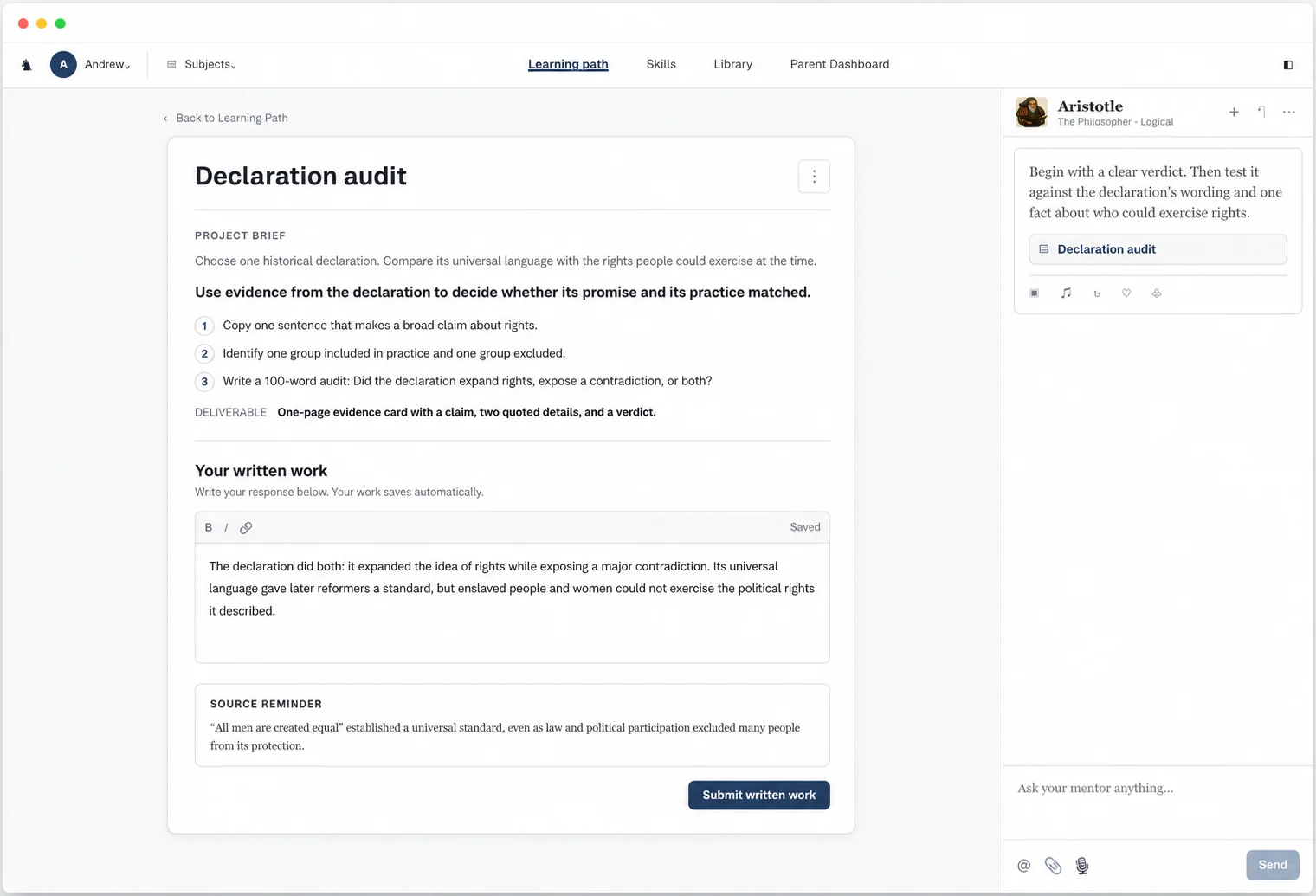
Families who care about making things, not just reading about them, should look at what a child produces. In our courses, each unit builds to projects, with one at the midpoint and one at the end: a written argument in history, an investigation in science, a design in engineering, a perspective rewrite in English.
Every project has a brief that says what to make and how it will be judged.
The mentor coaches projects without writing them; it helps your child think through the next step, going back and forth until the idea is understood rather than memorized, and never hands over the final answer.
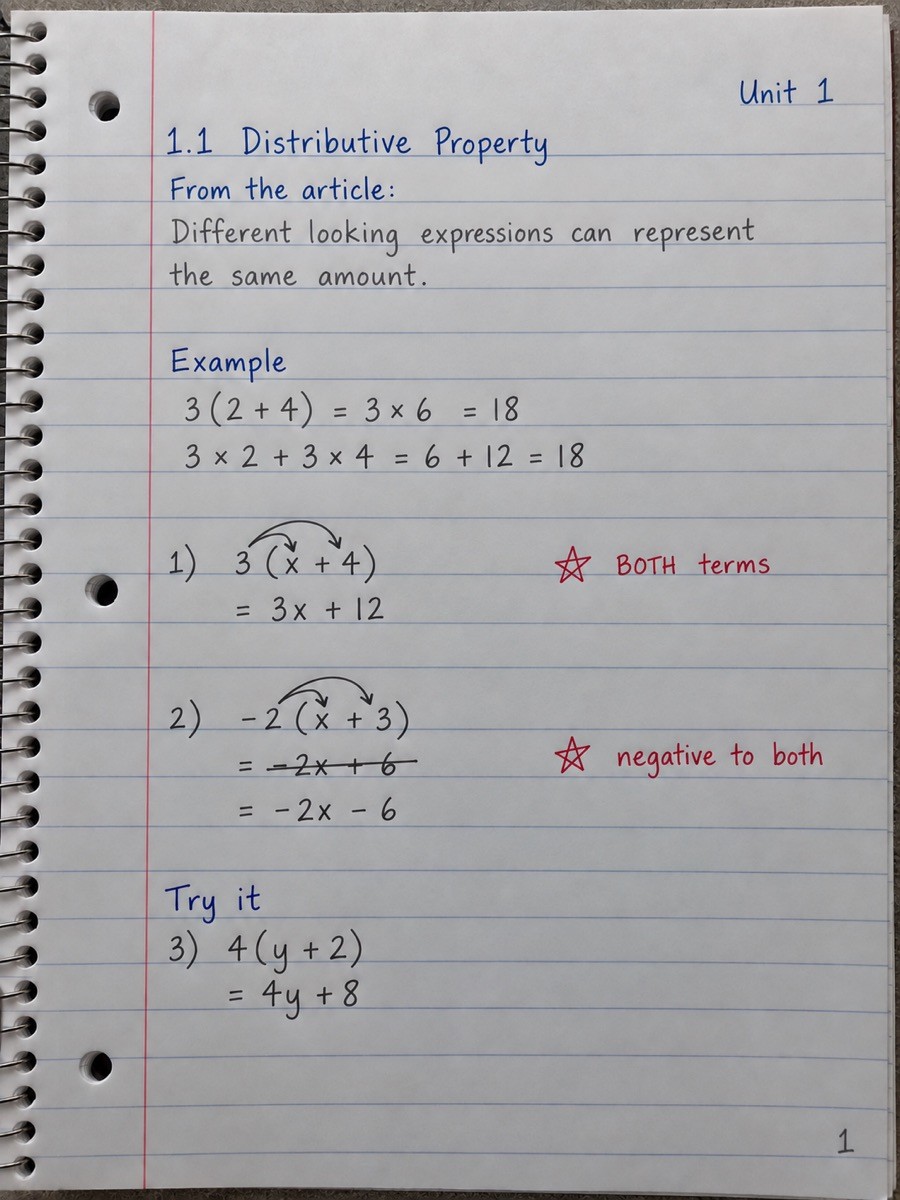
For kindergarten through 2nd grade, our Foundations program teaches each skill by showing it, guiding your child through it, and then letting them do it alone, and handwriting on paper can be scanned into their work.
Books and reading
Reading-centered approaches ask how much real reading a child does. Every lesson in every subject is a reading, and in English language arts placement sets where reading starts, so a strong reader is not held to grade-level text and a struggling reader starts where they can read with understanding. In Foundations, reading lessons use only words your child can sound out today.
Beyond lessons, the Library's Free Read shelf holds classic books, and the mentor sits beside those too, so your child can stop on a hard sentence in an old novel and ask what it means.
Consider how your child will revisit an idea
A method needs a way to return to earlier thinking. That might be a worked example, a written explanation, or a question saved for review.
Our optional printable notebook guide gives children from grade 3 suggestions for useful notes. A learner can scan a page to keep it with their work, without every subject needing the same note-taking routine.
How anyone knows the learning happened
Progress checks along the way and a reading check at the end show whether each idea has landed before the next lesson. During a check, the mentor can clarify the ideas without pointing to an answer.
Our checks and submitted projects receive grades, and project feedback gives a next step. Compare methods by the evidence they leave: can the learner explain or use the idea afterward?
Compare the time each approach asks of your family
A parent-led approach can include choosing books, explaining material, and grading responses. A course that supplies instruction and feedback changes that division of time. Compare those responsibilities with the day your family can actually sustain.
Our courses include the teaching and grading, with flexible lesson hours. Younger children need an adult nearby, and older learners vary in independence. The trial lets you see which parts of the day need your involvement.
What your state requires, whatever the method
No state requires a particular method. States set subjects, sometimes hours or days, and sometimes a test or an evaluation. Many list reading, writing, math, science, and history or civics, which our four core subjects cover; where a state adds subjects such as health or physical education, those are electives in our catalog. Our requirements checker shows your state's list.
On either plan, the document tools draft the documents your state uses, from a letter of intent to quarterly reports and a portfolio, filled in from your child's work and ready to sign. The daily check-in builds the attendance record, and hours are counted for each subject.
Frequently asked questions
- Do I need to pick a method before we start?
- No. You choose subjects and tell us about your child; placement and the lessons take it from there, and the answers to the questions above come with them.
- Can we switch to your approach in the middle of the year?
- Yes. Placement finds where your child is now in each subject, so nothing already learned is repeated and no gap is skipped.
- Can we include our faith?
- Our curriculum isn't a religious curriculum unless you want it to be. Add Bible study, Christianity, or any faith as a custom elective, and we build a course around it, graded and recorded like every other subject. You can also add faith as an interest, and we'll weave it into any or all subjects, so it doesn't have to be its own course.
See a week with the teaching done for you
Two weeks of placed, taught, and graded lessons show what homeschooling is like when the planning and grading are not yours.
$149/month per child after the trial.