Homeschool vs Learning Pods
A learning pod shares school days between families. Every child in the pod has their own course, so nobody has to write lessons for the group.
What a learning pod is
A learning pod is a small group of families who share part of the school week. They meet in one home on agreed days, and either take turns teaching or hire a teacher or tutor together. The pod is an arrangement between families, not a curriculum, so the group still decides what is taught, who teaches it, and who grades it.
Homeschooling with us settles those questions for every child: the teaching, grading, and records come with the course.
Different starting points in the same room
Each child in the pod takes placement separately in every chosen subject. Lessons can start within a grade, so sharing a room does not mean agreeing on one level for the group.
Each family adds its own children, and each child takes placement in every subject, so the group never has to agree on one level or one book.
What children study on a pod morning
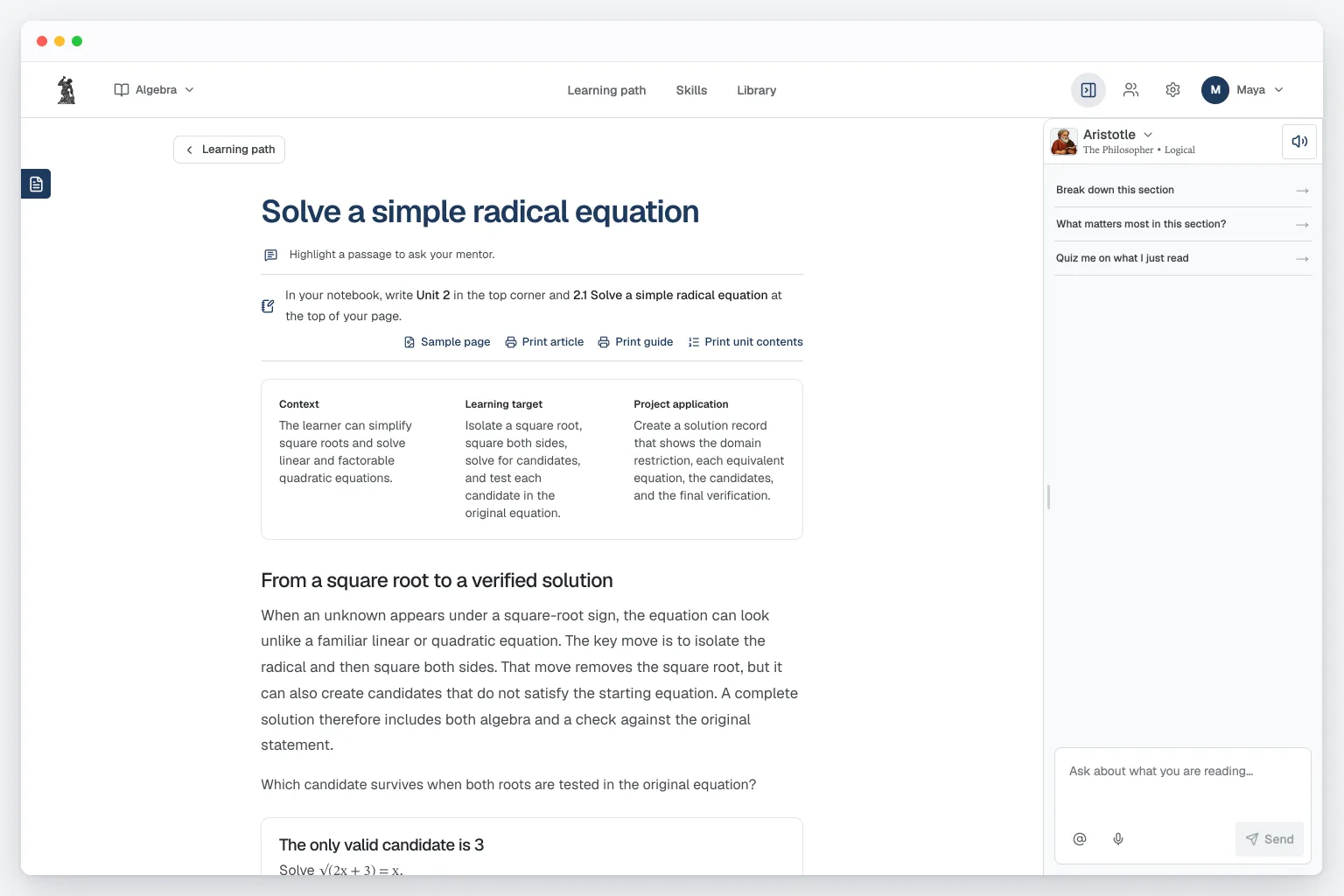
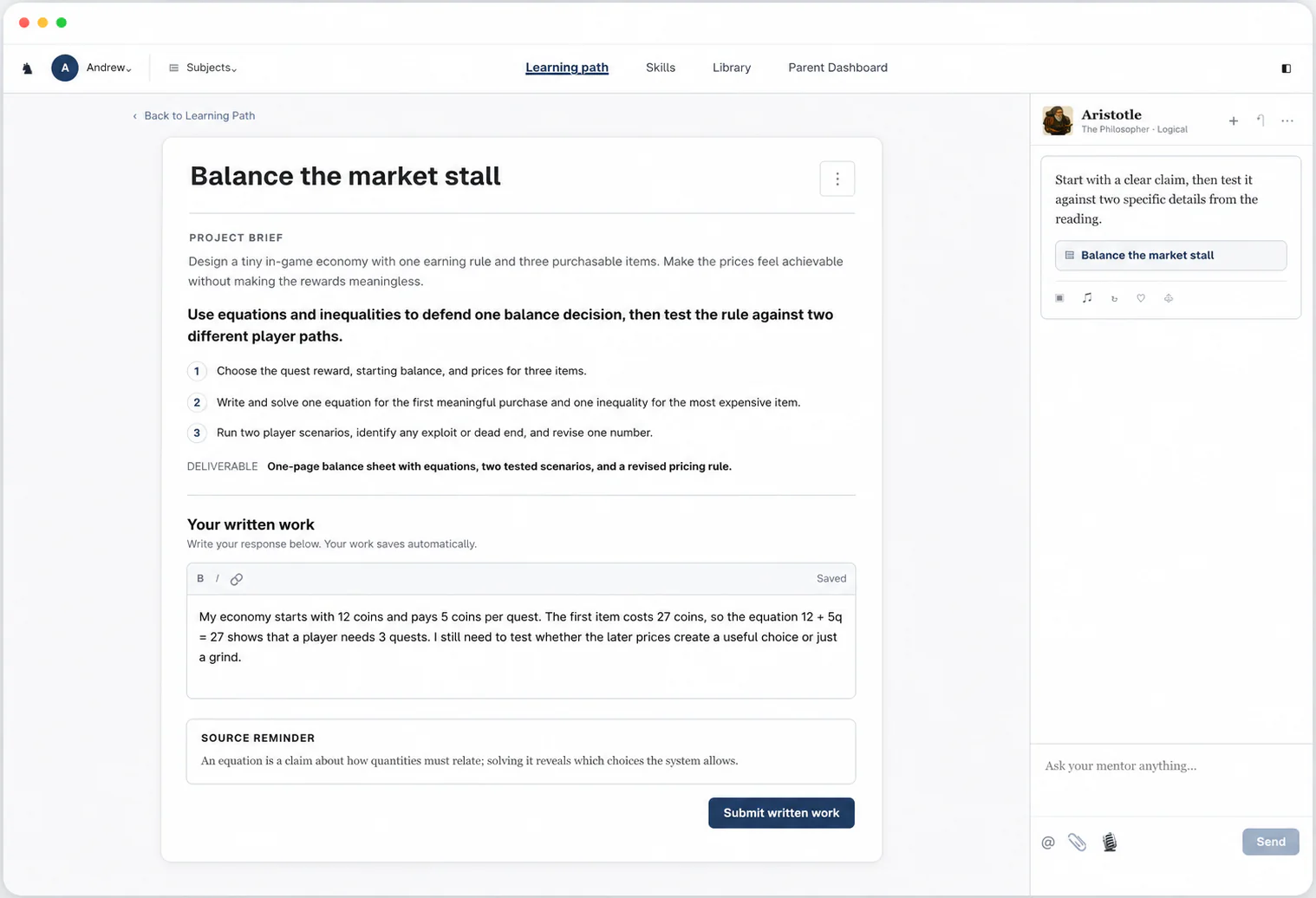
Children can study their own readings, checks, and projects during the same pod morning. Our Parent Dashboard organizes each family's children, and the coursework has no live-class schedule for the pod to coordinate.
Who teaches and grades in the pod
Each child can ask our Always-On Mentor about their own reading while the pod studies together. A question stays with that child's lesson, without turning into a new group lesson for the adult to teach.
We grade each child's submissions immediately, so adults sharing the pod day do not have to divide up grading. Each child receives help with errors and a specific next step for revision.
Each family keeps its own records
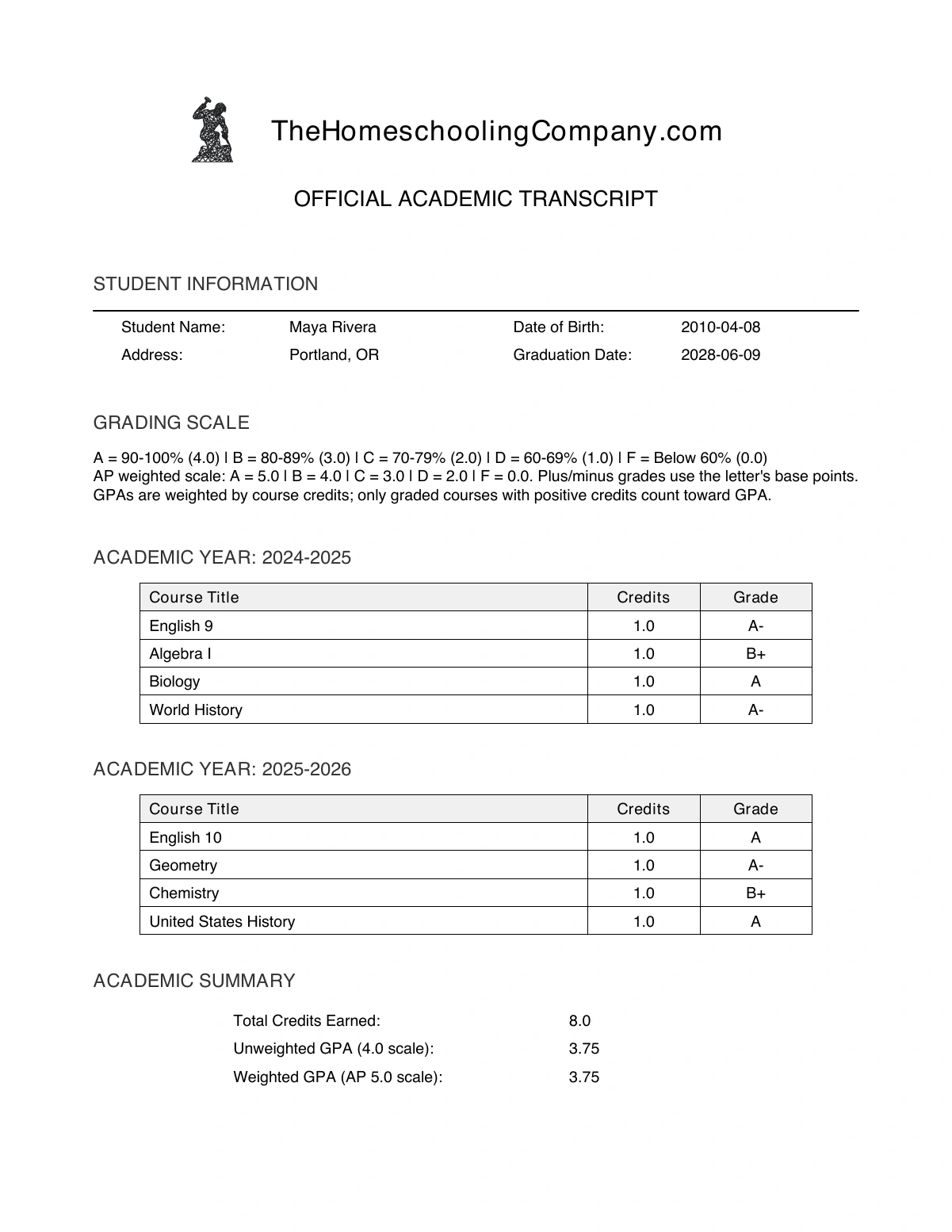
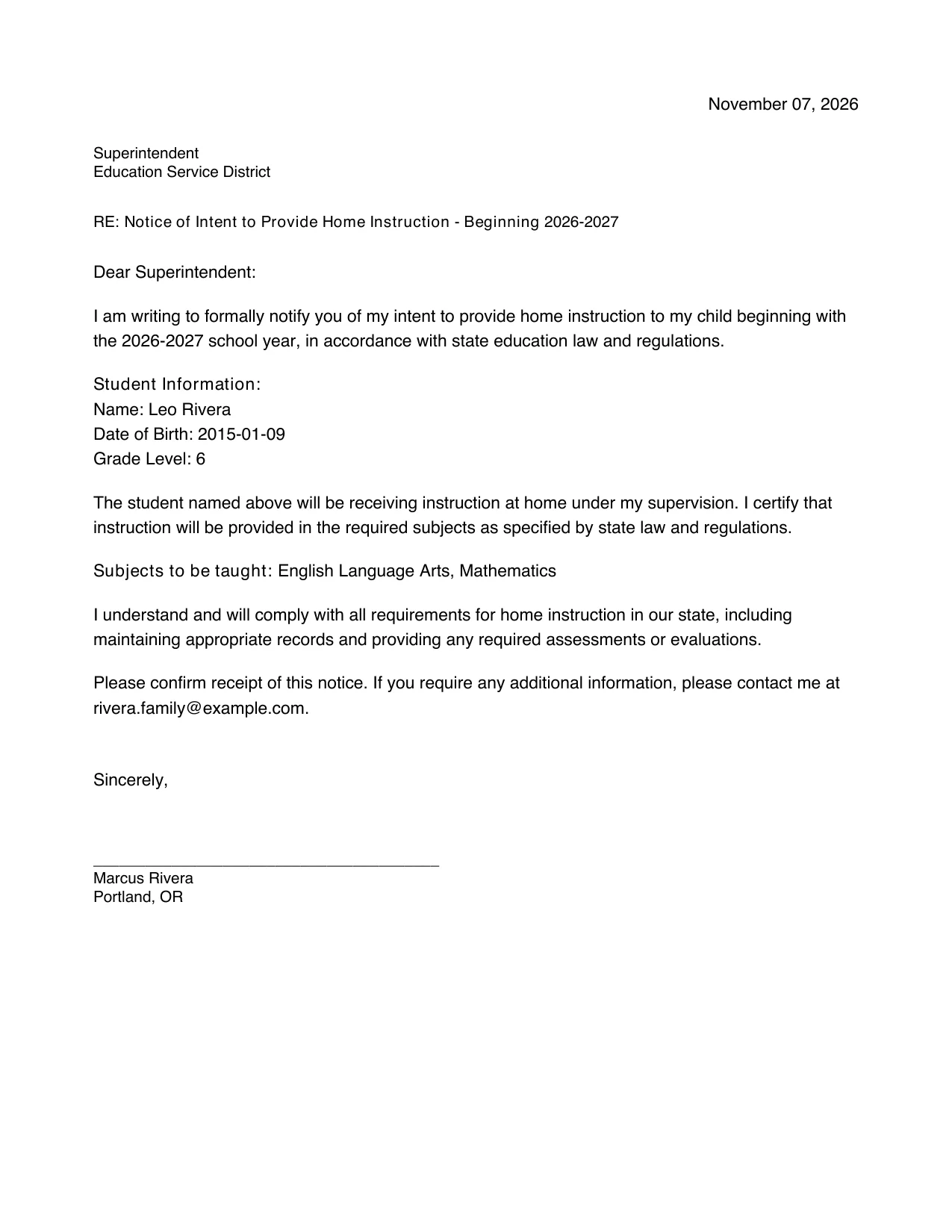
Each family gets documents for its own children, even when they study together. Learning summaries, portfolios, and state document drafts use that child's coursework; high school transcripts include their own courses, credits, and GPA.
Pod days without anyone writing lessons
Children in a pod can sit in the same room and each work through their own course, starting at their own level, while the adult in the room keeps the day running rather than preparing a lesson for everyone. Each family's Parent Dashboard holds only its own children's work, grades, and records, so nothing about one child is shared with the rest of the group.
Other questions
- Does each family in the pod need its own account?
- Yes. Each family has its own parent account with its own children, so each family sees only its own children's grades and records.
- Can we use ESA funds?
- Yes, in Arizona, Alabama, New Hampshire, and Utah, where we are an approved vendor. Your program decides which purchases qualify. ESA payment steps
Keep the group time. Lose the lesson preparation.
Give each learner a course that starts at their own level, so shared time does not depend on parents taking turns writing lessons.
$149/month per child after the trial.