Homeschooling gives an autistic child a quiet, predictable day, each subject starting at their own level, and lessons that can use their interests.
Fit the learning environment to your child
Autistic children differ in what helps them learn. Homeschooling lets your family choose the setting, hours, and pace around your child’s needs.
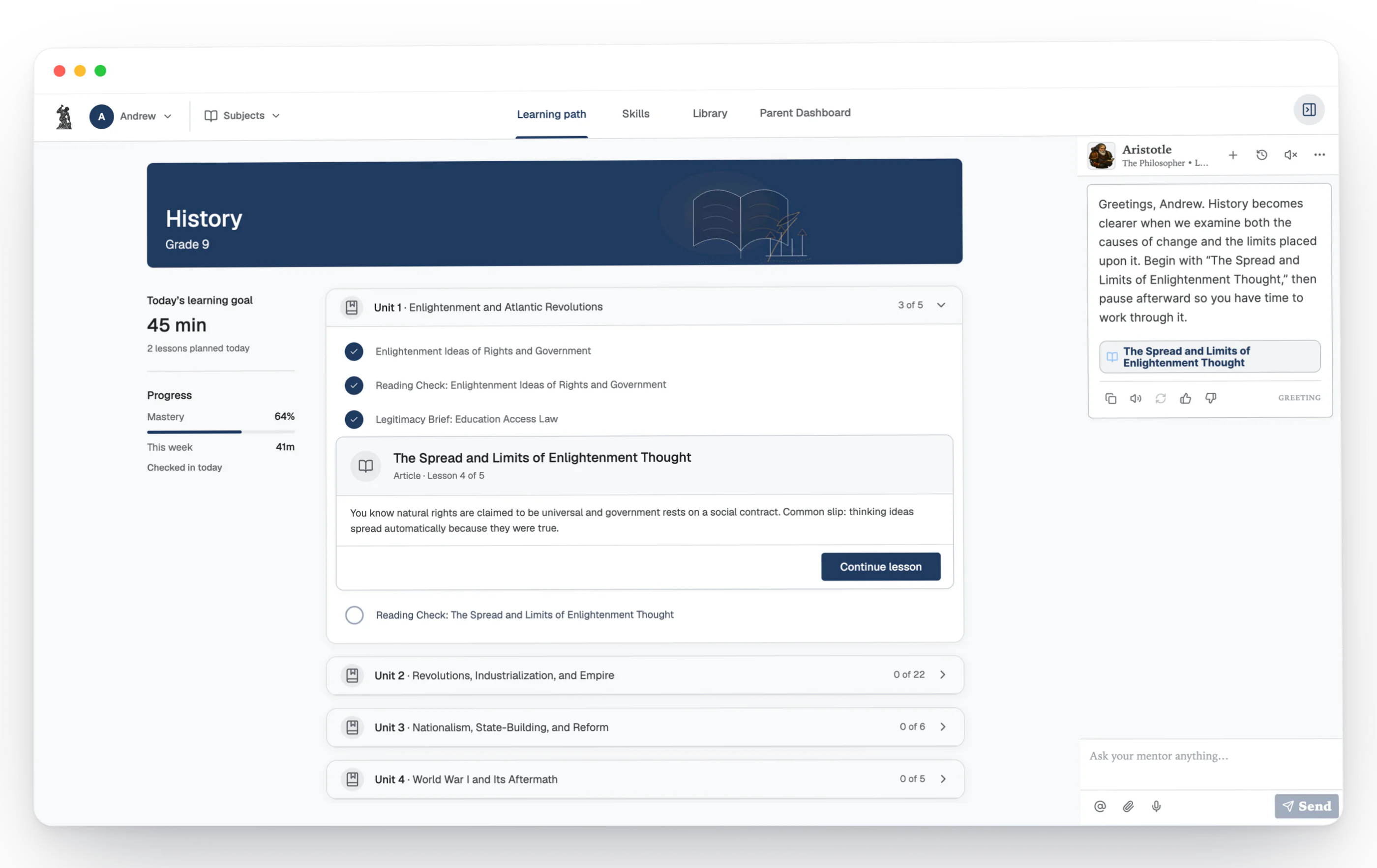
Our courses provide a sequence of lessons, projects, and feedback. A visible plan and a consistent lesson structure can help a child who prefers to know what comes next; flexible hours leave room to change the day when needed.
A day that follows the same shape
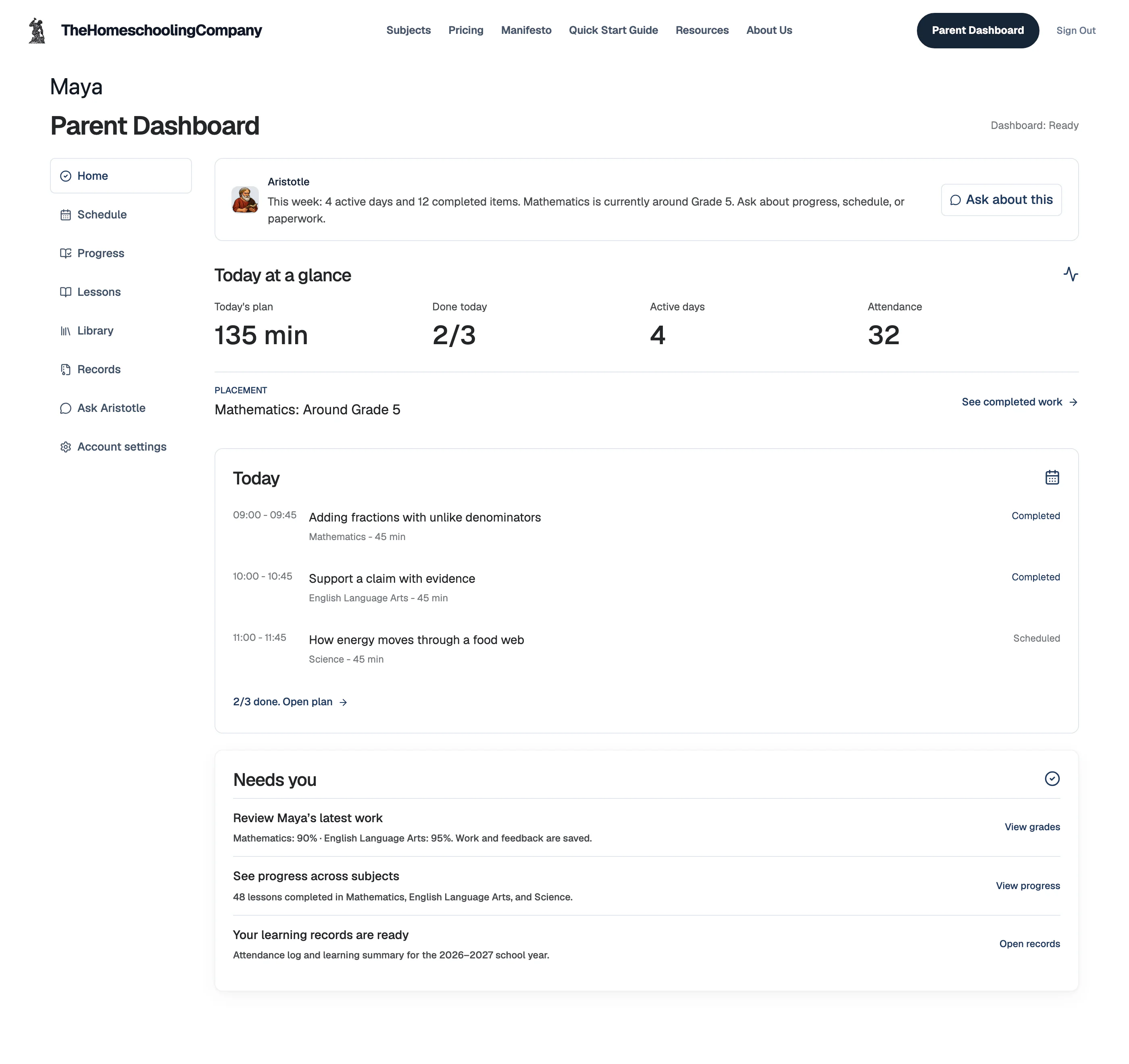
Predictability starts with the schedule. The weekly schedule follows the days and hours you choose, with breaks between subjects. Your child sees the same kind of daily plan each morning, and you can move a block when an appointment lands on it.
Each subject is a path that runs in order, so the next thing to do is never a surprise. Every lesson shows its reading time before your child starts, and it ends with the same kind of reading check: questions on the lesson's ideas.
Review checkpoints come at regular points, at least every three groups of lessons, so even review is expected.
Each subject at its own level
A child can be ready for algebra and still find questions about a two-paragraph story hard. Placement handles that kind of unevenness one subject at a time. Before the first lesson, your child takes a short adaptive test in each subject, 25 questions with no timer, and the course begins at the specific skills where their knowledge runs out.
Nothing about one subject holds back another. If a starting point turns out wrong, your child can retake placement from the skill map, which shows each skill in the course and how much evidence your child has shown for it. A retake keeps the work your child already finished.
Give an interest room without prescribing one
You can share your child’s interests during setup. Lessons may use those interests for examples when they help explain the skill, such as elapsed time through a railway timetable or classification through marine life.
An interest can also become a custom elective on School in a Box, with its own course path beside the core subjects. Your child can explore it as a subject rather than have it inserted into every lesson.
Choose how to ask for an explanation
From third grade, your child can type a question about a passage to the Always-On Mentor, listen to a word, or request a drawing. Kindergarten through second grade uses spoken mentor conversations, so that part of the program needs to suit how your child communicates.
Help stays available without a live-class appointment. Independent checks still require your child’s answer, while project guidance helps them decide what to do next. Try those interactions with your child to see which are useful.
Review the learning with your child
Submitted checks and projects receive grades and feedback. The Parent Dashboard shows the work behind the result, which can help you distinguish a topic needing another explanation from a task that needs a different arrangement.
Mentor concerns and documents awaiting a signature appear alongside progress. The record gives you a way to review how the plan is working over time.
Therapy, evaluations, and school services
Private therapy, such as speech or occupational therapy, carries on as before, and lessons fit around the appointments because nothing is scheduled live. When you withdraw, ask the school for copies of your child's IEP or 504 plan and recent evaluations.
Autism is one of the disability categories in the federal Individuals with Disabilities Education Act (IDEA). The U.S. Department of Education says the district where a homeschooled child lives is generally responsible for finding and evaluating them, including reevaluations. Once you consent in writing, an initial evaluation must be finished within 60 days unless your state sets a different timeline.
Whether the district then provides services depends on state law, and a homeschooled child has no individual right to all the services an enrolled child would get. For example:
- Nevada requires each district to provide special education and related services to eligible homeschooled children the same way it serves children in private schools.
- New Jersey evaluates after a written request; the district must offer a full public program only if your child enrolls, and otherwise may provide services under a plan.
- Missouri lets a district offer services to homeschooled students and bars it from refusing a service it offers because a child is homeschooled, but gives no individual right to services.
- Iowa keeps special education services open to families who file Form A under competent private instruction; the routes that file nothing give them up.
Lessons can fit around specialist appointments because there are no live class times. Read-aloud and a reading ruler are available when they help your child follow the material.
Frequently asked questions
- Does my child have to be on camera or join a live class?
- No. There are no live classes. The daily check-in can be a photo or a quick check-in.
- Does school have to happen in the morning?
- No. You pick the start time in the weekly schedule, and any lesson can be done at any hour. Attendance comes from your child's check-in and activity, whenever that is.
- What if my child wants to stay on one lesson for a long time?
- They can. No bell ends a lesson, and the session stays open as long as your child is working in it.
The same shape every day
Placement sets each subject where your child is, and the Today card shows the same plan every morning.
$149/month per child after the trial.
Sources (7)
- 34 CFR 300.8: autism as a disability category
- U.S. Department of Education, OSEP QA 22-01: home-schooled children with disabilities
- 34 CFR 300.301: initial evaluation within 60 days of consent
- Nevada Revised Statutes chapter 392
- New Jersey Department of Education: homeschool FAQ
- Missouri Revised Statutes 162.996: special education for home school students
- Iowa Department of Education: Private Instruction Handbook