Child performers can homeschool around rehearsals, auditions, and shoots. Here is how school fits a production and what California and New York ask on set.
What we do for a working child
A performer's calendar changes by the day: an audition across town at 2 p.m., a callback tomorrow, a week of night rehearsals, then a month on the road. A school schedule cannot follow that, and a child who misses class for work spends the next week catching up instead of learning.
School follows the calendar instead. We place your child in each subject, teach every lesson, help them the moment they are stuck, grade the work, and keep the attendance and records that permits and your state may want.
There are no live class times, and the next lesson waits exactly where your child stopped, whether that was in a dressing room or at home.
A week around a production
In our Parent Dashboard, the weekly schedule asks for school days, a start time, daily minutes, and block and break lengths, and fills the week with blocks that rotate through your child's subjects. When a call sheet changes the night before, you move or edit the blocks; nothing is missed, because nothing was live.
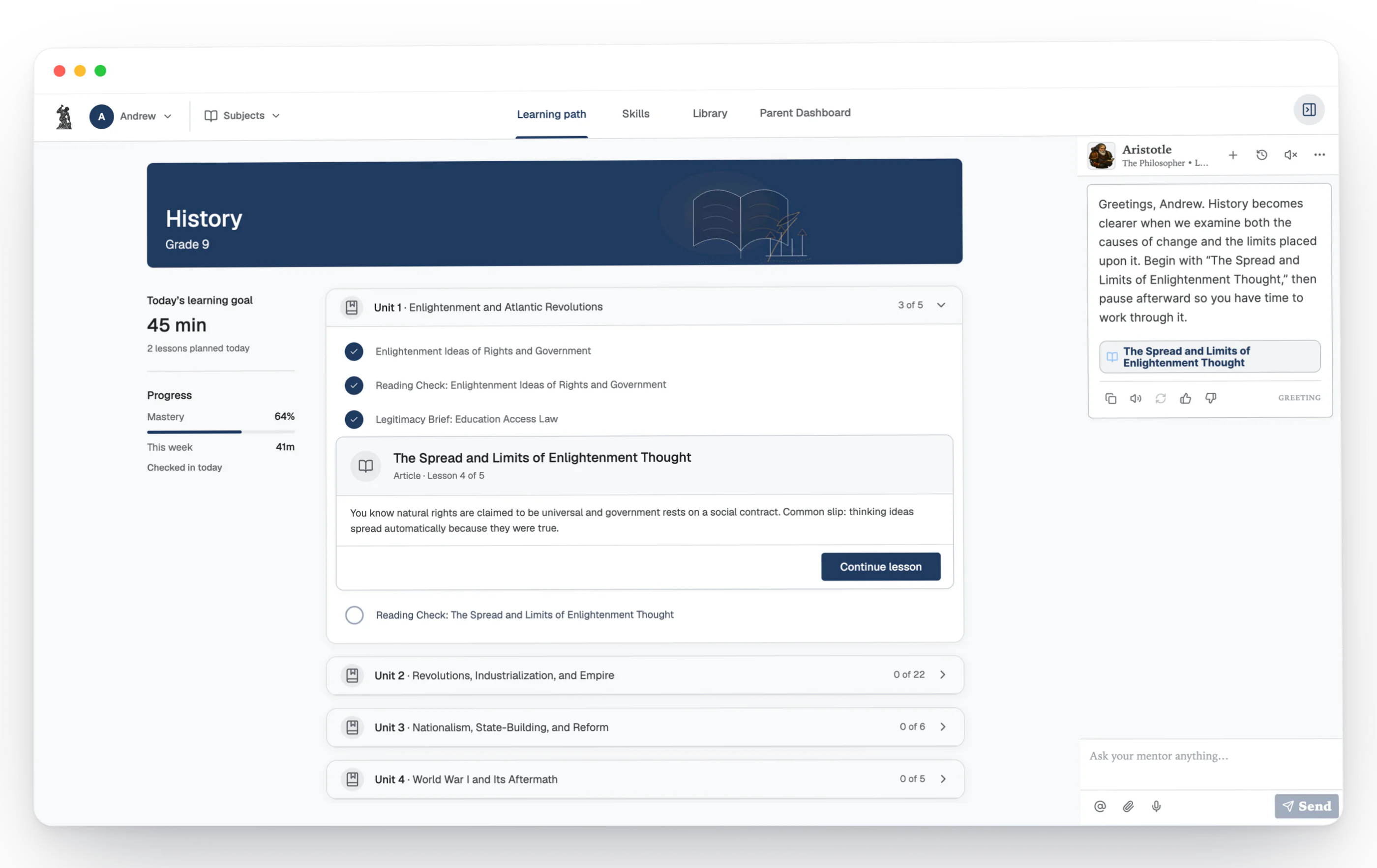
Short gaps work, too. Every lesson shows its reading time up front, such as an 11-minute read, so your child can pick one that fits the wait between scenes. They check in once a day, their activity keeps the session open, and the minutes count wherever the work happens.
When a set has no signal, the Print / PDF button on each lesson puts the reading on paper.
Because each course moves at your child's pace, a heavy shoot week can be light on school and the week after can make it up. Nobody falls behind a class, because there is no class to keep up with.
Work permits and school on set
Federal child labor law does not cover child actors, so the rules for child performers come from each state, and they are separate from homeschool law. California and New York show how much those rules can differ.
California
The Labor Commissioner issues an Entertainment Work Permit, which a minor needs from 15 days old to 18, and which is renewed every six months. Applicants 14 to 17 first complete sexual harassment prevention training.
For a school-age child, the application needs written verification from the child's school of a satisfactory academic and attendance record; for a private school, that verification comes from the person in charge of it.
On set, a studio teacher certified by the Labor Commissioner teaches school-age minors. On a day the child's school is in session, a child aged 9 through 15 may be at work for up to nine hours: no more than five working, at least three in school, and at least one in rest and recreation.
For ages 6 through 8, the limit is eight hours, with no more than four working and at least three in school.
New York
A parent or guardian applies to the Department of Labor for a child performer permit before work begins and gives a copy to each employer. Child performers must keep up satisfactory school performance while working during academic semesters.
For enrolled students, the employer must provide a New York certified teacher, time and space for school, and an average of at least three hours of instruction per school day. That teacher requirement does not apply to a child who is homeschooled and receiving appropriate instruction, so your child's regular lessons stay their school.
Other states have their own permits and hours, set by the state labor department. Ask it before your child's first job in a new state.
Proof that school is on track
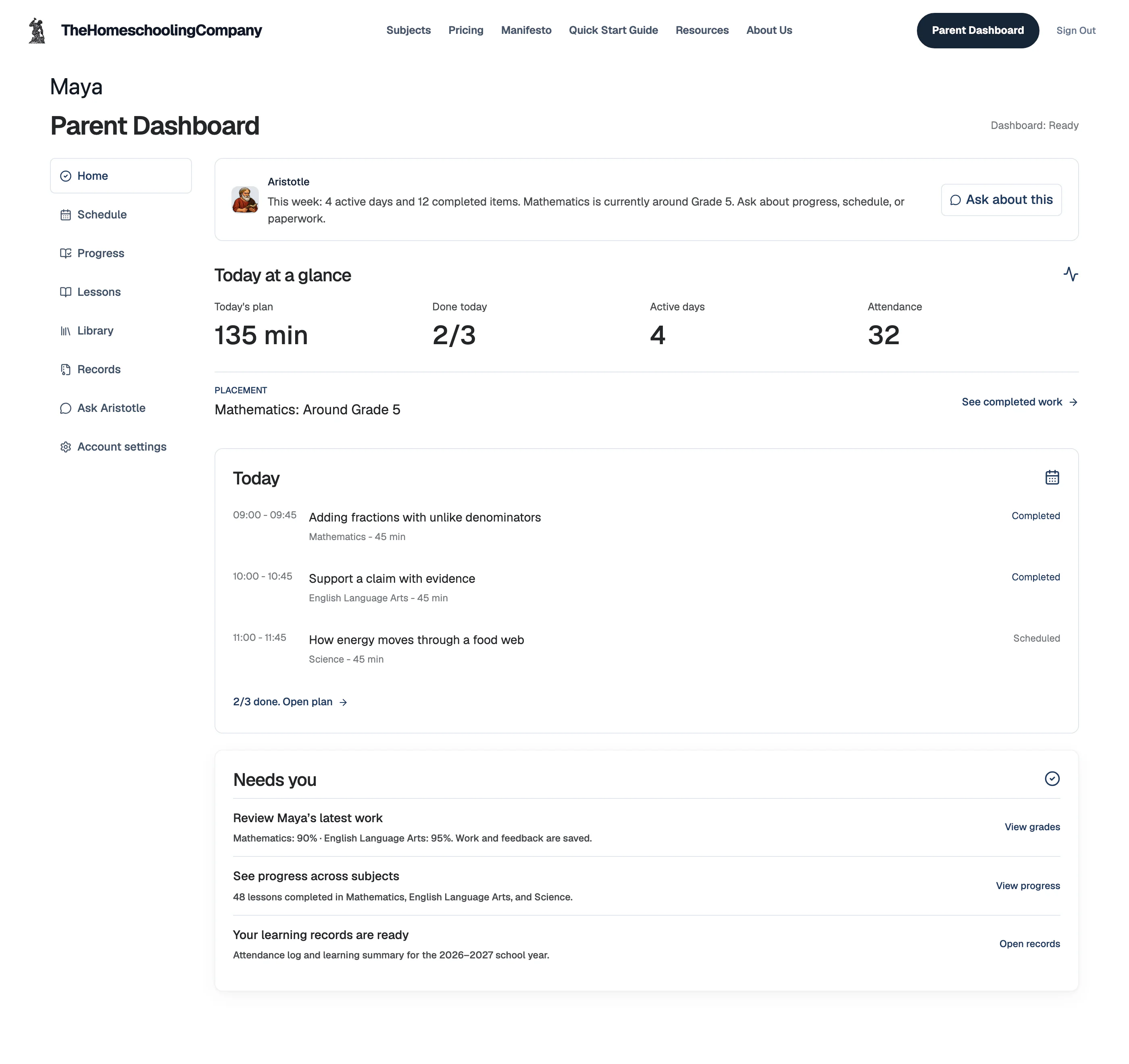
Permit offices, productions, and studio teachers may ask how your child is doing in school. In our Parent Dashboard, Records gives you an Attendance PDF and a Learning summary PDF in one click each, built from your child's actual check-ins, lessons, and grades.
The Progress tab shows each subject's grade level, mastery, and lessons completed, and Export records downloads the whole record in one file.
The document tools also draft the homeschool documents your state calls for, filled in from your family details and your child's record and ready for you to sign, so the homeschool side of the paperwork is not one more thing to do between auditions.
Help wherever the work happens
Your child may do school surrounded by adults who are busy working. Our Always-On Mentor is built into each lesson, so help never depends on who on set is free.
Your child can highlight any passage to have it explained, hear a word pronounced, have an idea drawn step by step on the mentor's board, or ask anything in their own words.
An explanation or project question can help your child return to the next step between commitments. Independent checks still require their own answer, so the saved record reflects work they completed.
Subjects, grades, and high school credit
Most families use School in a Box, our full plan of up to 12 subjects at once: the four core subjects, math, English language arts, science, and history, plus whatever else your child adds.
Arts and communications are in the catalog, and any topic can become a custom elective, from the history of musical theater to film editing, if your child wants one.
Submitted work receives grades and project feedback as your child continues the course. The saved results let you review academic progress alongside a changing production schedule.
For a teen performer, every subject studied during a school year becomes a line on the transcript, with credits counted from the hours of completed lessons at 120 hours a credit. We generate the transcript, course descriptions, and diploma for you to sign, so a teen who spent junior year on tour still graduates with a complete record.
Frequently asked questions
- Do my child's lessons have to be about acting or music?
- No. Lessons draw an example from your child's interests where one fits, and the stage can be one of them, but it does not have to be. Your child can study anything.
- Can my child do our lessons during school time on set?
- Yes, wherever there is a connection: your child signs in and continues their regular lessons. Ask the production's studio teacher how they run school hours on set.
- What if a run or a shoot lasts months?
- School keeps going around it. Each course moves at your child's pace, so lighter weeks during the job and heavier ones between jobs still add up to a full year.
School that follows the call sheet
Placement sets each subject where your child is, and the next lesson waits wherever the work takes them.
$149/month per child after the trial.
Sources (6)
- U.S. Department of Labor: Fact Sheet 43, child labor provisions for nonagricultural occupations
- California Labor Commissioner: child labor and entertainment work permits
- California Labor Commissioner: Entertainment Work Permit
- California Labor Commissioner: Child Labor Laws booklet (entertainment section)
- 8 CCR 11760: hours for minors in the entertainment industry
- New York State Department of Labor: child performers