A twice-exceptional child is advanced in some areas and has a learning difference in others. Homeschooling lets each subject start where that child really is.
Make room for both strength and support
A twice-exceptional child may need advanced work and learning support at the same time. A single overall grade can hide that difference: an inventive science explanation may take much more effort to write than to understand.
Look at the demands of each subject and task separately. The aim is to offer worthwhile challenge while making the explanation and the work accessible to your child.
Set a starting point for each subject
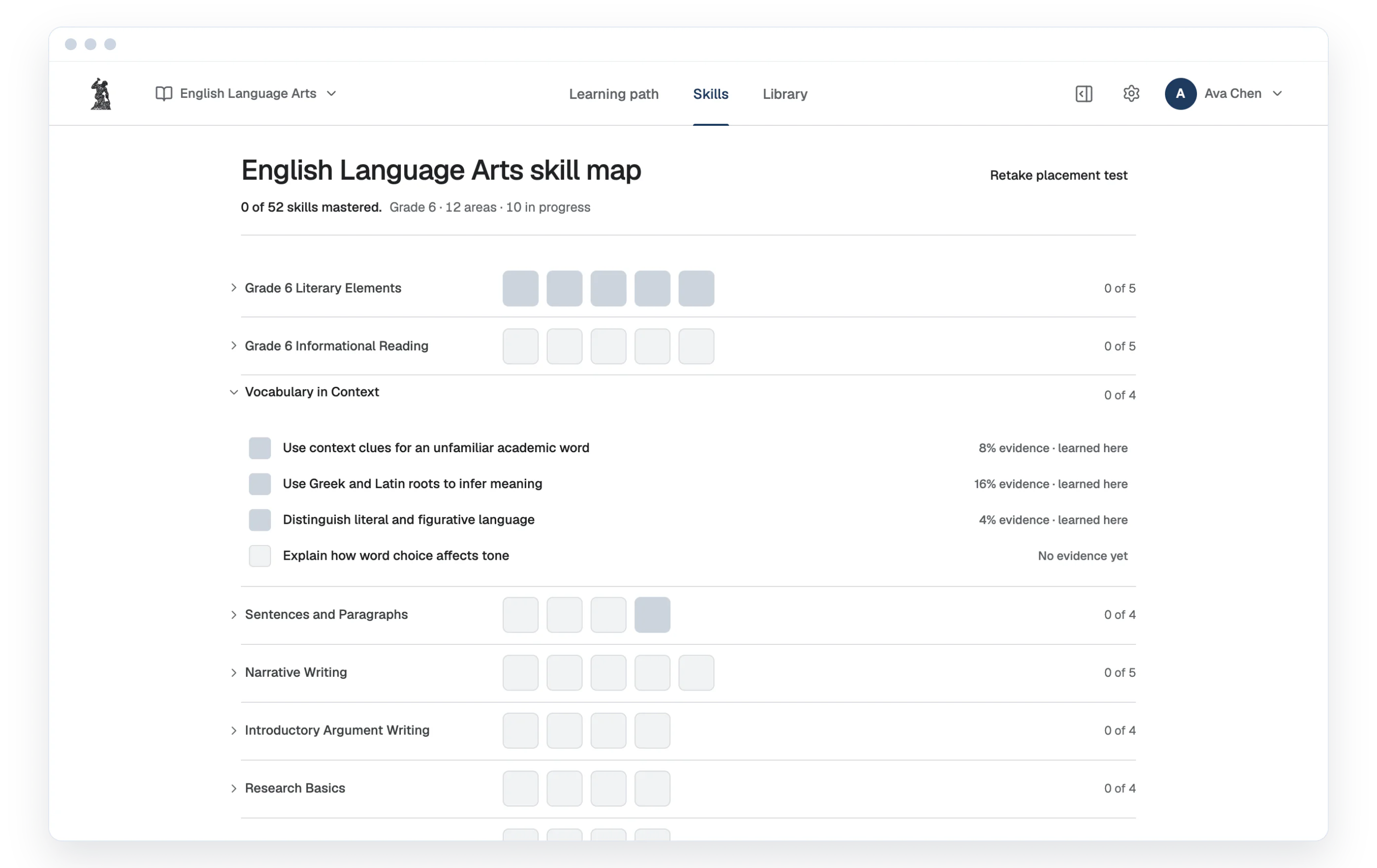
Our placement tests check subjects separately and have no timer. A suggested starting point can move one subject ahead while another returns to an earlier skill, with you confirming grade changes.
The skill map shows the evidence for each skill. If the first lessons reveal a mismatch, placement can be retaken while completed work remains saved. A starting result guides the next lessons; it is not a diagnosis.
Keeping the weak skill from blocking the strong one
The real trap for a 2e child is a weak skill gatekeeping a strong subject: the science is easy, but the reading is not. The tools on every lesson let the ideas through.
Your child can listen to the lesson and unfamiliar words aloud, follow a line with a reading ruler, or ask the mentor to draw an idea as a diagram.
Multiple-choice reading checks let your child show understanding without spelling every response. Each lesson also gives its reading time and explains where the work leads, helping a child see the size of the task before they start.
Help with a difficult passage or a deeper idea
Our Always-On Mentor can explain a difficult passage, draw an idea, or discuss a follow-up question. Your child can use it to work through a confusing part in one subject and explore further in another.
Independent checks still require your child’s answer. On projects, the mentor guides rather than writes. School in a Box also offers promotion exams when a subject is ready to move up, and advanced courses for teens ready for that level.
See the thinking in the finished work
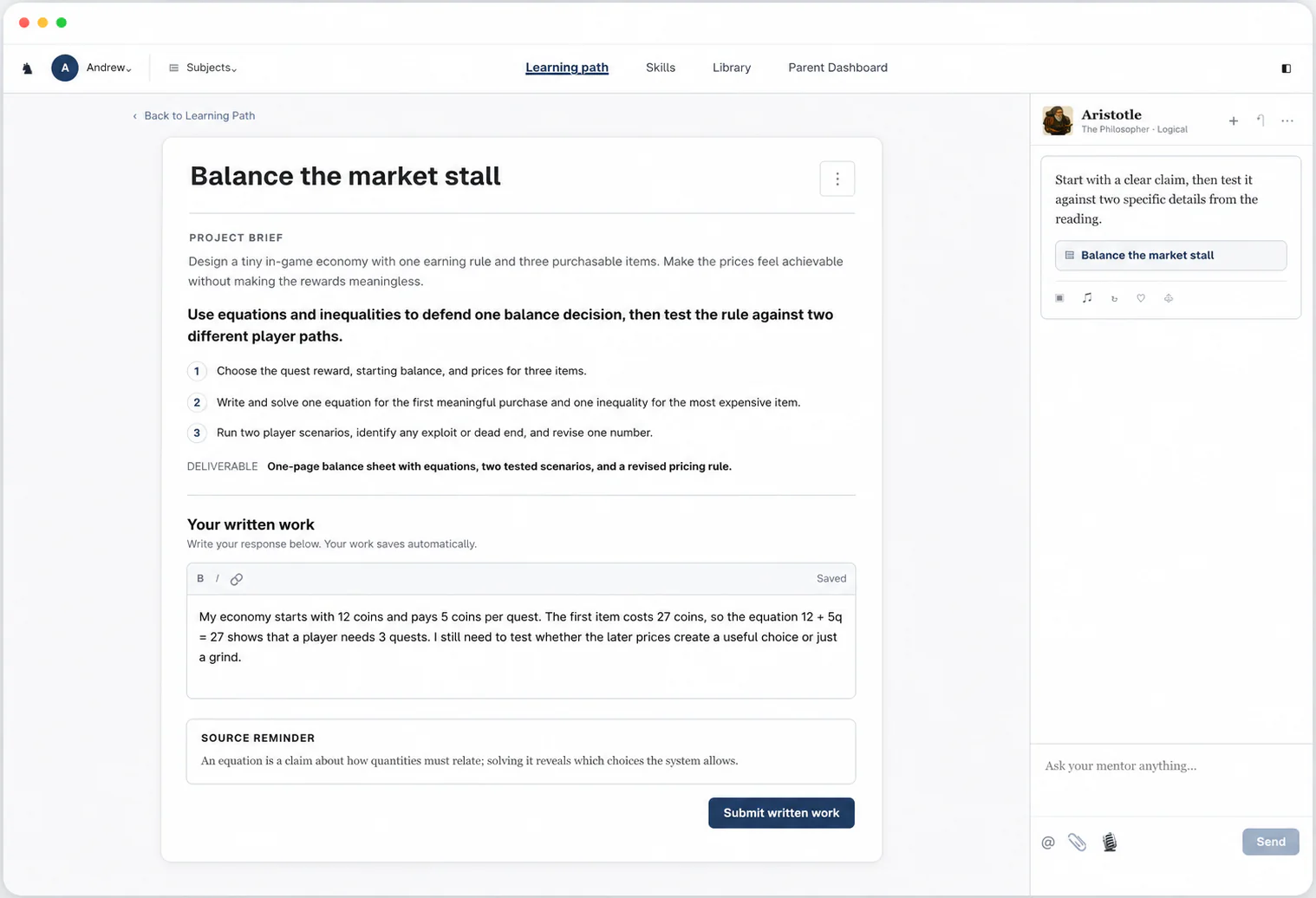
Projects ask your child to reason, explain, and produce something of their own. Feedback identifies strengths, areas to improve, and a next step; some submissions also receive spoken feedback.
Revisions and earlier attempts stay in the record. The Parent Dashboard lets you inspect that work alongside progress in other subjects, giving a fuller view than one overall grade.
Evaluations for a child who seems too bright to need one
Bright children are sometimes turned away from evaluation because their scores look fine. The U.S. Department of Education has said that children with high cognition who have disabilities and need special education are protected under the federal special education law, the Individuals with Disabilities Education Act (IDEA), and that eligibility cannot rest on any single measure.
Homeschooling does not end your child's right to be evaluated. The Department says the district where a homeschooled child lives is generally responsible for finding and evaluating them. Ask in writing; once you consent, the evaluation must be completed within 60 days unless your state sets its own timeline. Whether services follow depends on state law.
In Pennsylvania, for example, a child already identified as needing special education needs a certified special education teacher or a licensed clinical or certified school psychologist to approve the home program before it starts, but a child identified only as gifted does not.
Frequently asked questions
- What if my child avoids the subject they find hard?
- Try a manageable block at a useful time, and look at a recent response with your child. A confusing explanation, an unsuitable level, and difficulty beginning a task call for different changes. The mentor can help with the subject question.
- Will the transcript show how uneven my teen's levels are?
- No. A transcript lists each course by subject name with its credits and grade for the year. Starting levels are not printed.
- Does my child need a 2e diagnosis to homeschool this way?
- No. Placement measures each subject directly. A diagnosis matters if you want district services or an evaluation.
Advanced work and extra support, side by side
Placement sets every subject on its own, so the strong ones start ahead and the hard ones start where your child is.
$149/month per child after the trial.
Sources (4)
- U.S. Department of Education, OSEP: Letter to Delisle (December 20, 2013) on children with high cognition and disabilities
- U.S. Department of Education, OSEP QA 22-01: home-schooled children with disabilities
- 34 CFR 300.301: initial evaluation within 60 days of consent
- Pennsylvania Department of Education: Home Education and Private Tutoring Guide (students with a disability)