AP Biology exam prep for homeschoolers.
Cells, heredity, evolution, and ecology come through models and data analysis.
From investigation to evidence
Alongside reading, the course focuses on data analysis and scientific writing. Families arrange any hands-on investigations separately. The subject map lists 24 units and 144 skills, starting with chemistry of life, cell structure and function, and cellular energetics.
- Scientific analysis and written explanations
- Data, model, and experimental-design responses
- Evidence-based biological explanations
A personalized lesson from the course
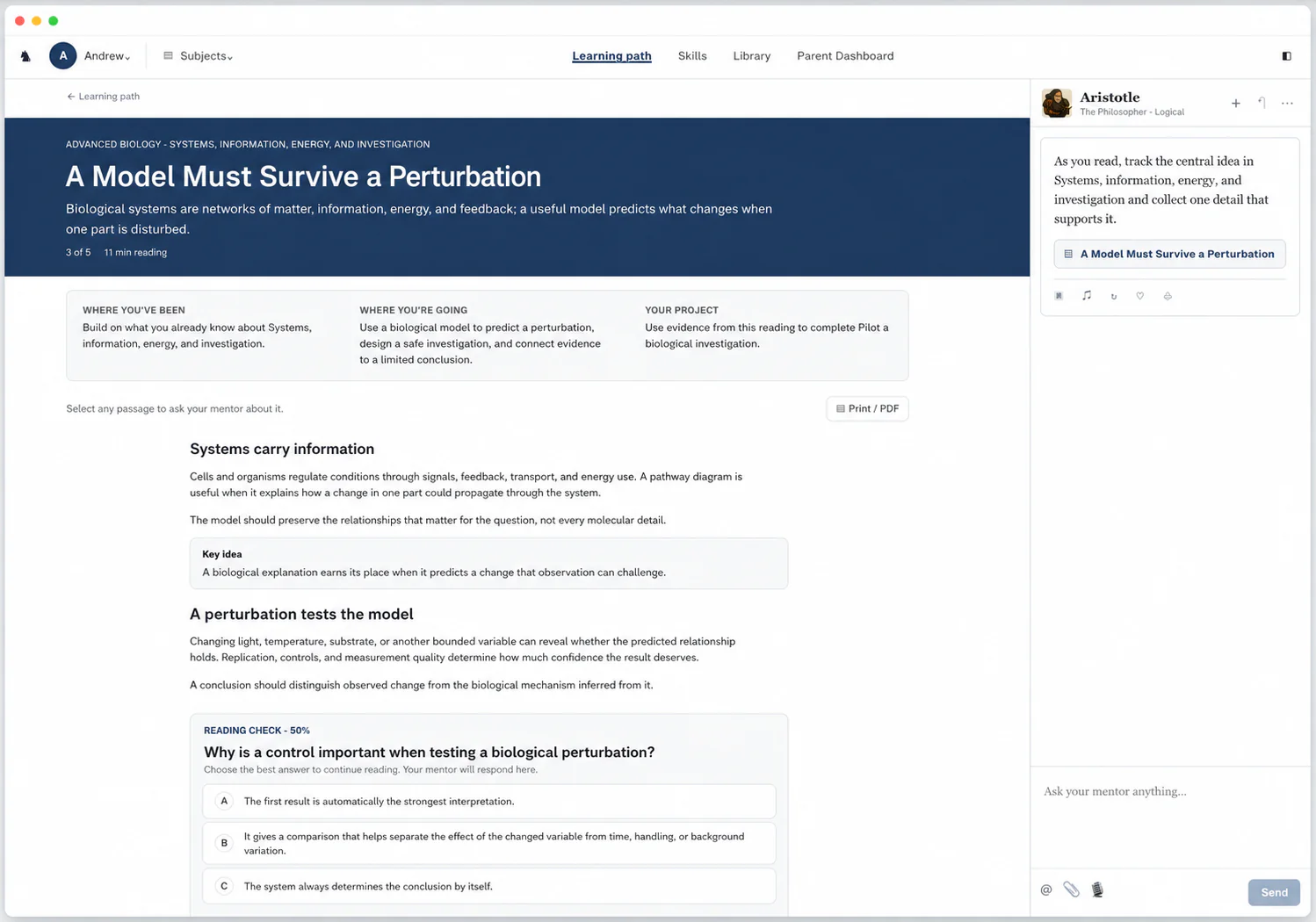
Biological systems are networks of matter, information, energy, and feedback; a useful model predicts what changes when one part is disturbed.
Pilot a biological investigation
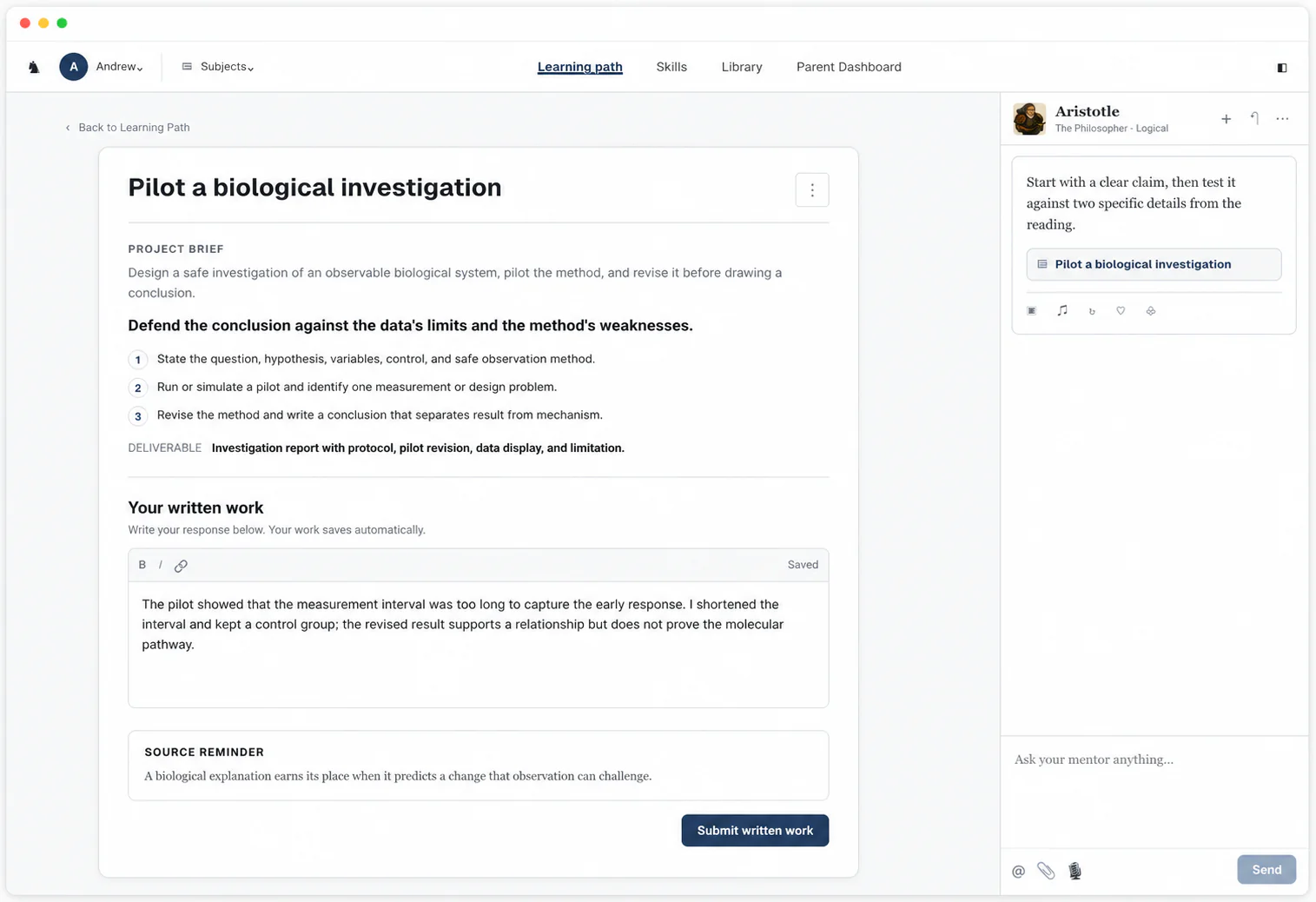
Design a safe investigation of an observable biological system, pilot the method, and revise it before drawing a conclusion.
Our Always-On Mentor can help your teen revise the method and write a conclusion that separates result from mechanism.
Units and skills
AP Biology exam prep24 units · 144 skills
Chemistry of life6 skills
- Explain biological concepts and processes in Chemistry of life
- Create or analyze a biological representation of Chemistry of life
- Evaluate scientific questions and methods involving Chemistry of life
- Represent and describe biological data connected to Chemistry of life
- Apply statistical tests and analyze data involving Chemistry of life
- Develop an evidence-based biological argument about Chemistry of life
Cell structure and function6 skills
- Explain biological concepts and processes in Cell structure and function
- Create or analyze a biological representation of Cell structure and function
- Evaluate scientific questions and methods involving Cell structure and function
- Represent and describe biological data connected to Cell structure and function
- Apply statistical tests and analyze data involving Cell structure and function
- Develop an evidence-based biological argument about Cell structure and function
Cellular energetics6 skills
- Explain biological concepts and processes in Cellular energetics
- Create or analyze a biological representation of Cellular energetics
- Evaluate scientific questions and methods involving Cellular energetics
- Represent and describe biological data connected to Cellular energetics
- Apply statistical tests and analyze data involving Cellular energetics
- Develop an evidence-based biological argument about Cellular energetics
Cell communication and cell cycle6 skills
- Explain biological concepts and processes in Cell communication and cell cycle
- Create or analyze a biological representation of Cell communication and cell cycle
- Evaluate scientific questions and methods involving Cell communication and cell cycle
- Represent and describe biological data connected to Cell communication and cell cycle
- Apply statistical tests and analyze data involving Cell communication and cell cycle
- Develop an evidence-based biological argument about Cell communication and cell cycle
Heredity6 skills
- Explain biological concepts and processes in Heredity
- Create or analyze a biological representation of Heredity
- Evaluate scientific questions and methods involving Heredity
- Represent and describe biological data connected to Heredity
- Apply statistical tests and analyze data involving Heredity
- Develop an evidence-based biological argument about Heredity
Gene expression and regulation6 skills
- Explain biological concepts and processes in Gene expression and regulation
- Create or analyze a biological representation of Gene expression and regulation
- Evaluate scientific questions and methods involving Gene expression and regulation
- Represent and describe biological data connected to Gene expression and regulation
- Apply statistical tests and analyze data involving Gene expression and regulation
- Develop an evidence-based biological argument about Gene expression and regulation
Natural selection6 skills
- Explain biological concepts and processes in Natural selection
- Create or analyze a biological representation of Natural selection
- Evaluate scientific questions and methods involving Natural selection
- Represent and describe biological data connected to Natural selection
- Apply statistical tests and analyze data involving Natural selection
- Develop an evidence-based biological argument about Natural selection
Ecology6 skills
- Explain biological concepts and processes in Ecology
- Create or analyze a biological representation of Ecology
- Evaluate scientific questions and methods involving Ecology
- Represent and describe biological data connected to Ecology
- Apply statistical tests and analyze data involving Ecology
- Develop an evidence-based biological argument about Ecology
Experimental design6 skills
- Explain biological concepts and processes in Experimental design
- Create or analyze a biological representation of Experimental design
- Evaluate scientific questions and methods involving Experimental design
- Represent and describe biological data connected to Experimental design
- Apply statistical tests and analyze data involving Experimental design
- Develop an evidence-based biological argument about Experimental design
Data analysis6 skills
- Explain biological concepts and processes in Data analysis
- Create or analyze a biological representation of Data analysis
- Evaluate scientific questions and methods involving Data analysis
- Represent and describe biological data connected to Data analysis
- Apply statistical tests and analyze data involving Data analysis
- Develop an evidence-based biological argument about Data analysis
Scientific argumentation6 skills
- Explain biological concepts and processes in Scientific argumentation
- Create or analyze a biological representation of Scientific argumentation
- Evaluate scientific questions and methods involving Scientific argumentation
- Represent and describe biological data connected to Scientific argumentation
- Apply statistical tests and analyze data involving Scientific argumentation
- Develop an evidence-based biological argument about Scientific argumentation
Cumulative biological investigation6 skills
- Explain biological concepts and processes in Cumulative biological investigation
- Create or analyze a biological representation of Cumulative biological investigation
- Evaluate scientific questions and methods involving Cumulative biological investigation
- Represent and describe biological data connected to Cumulative biological investigation
- Apply statistical tests and analyze data involving Cumulative biological investigation
- Develop an evidence-based biological argument about Cumulative biological investigation
Safe experimental practice6 skills
- Explain biological concepts and processes in Safe experimental practice
- Create or analyze a biological representation of Safe experimental practice
- Evaluate scientific questions and methods involving Safe experimental practice
- Represent and describe biological data connected to Safe experimental practice
- Apply statistical tests and analyze data involving Safe experimental practice
- Develop an evidence-based biological argument about Safe experimental practice
Inquiry design and variable control6 skills
- Explain biological concepts and processes in Inquiry design and variable control
- Create or analyze a biological representation of Inquiry design and variable control
- Evaluate scientific questions and methods involving Inquiry design and variable control
- Represent and describe biological data connected to Inquiry design and variable control
- Apply statistical tests and analyze data involving Inquiry design and variable control
- Develop an evidence-based biological argument about Inquiry design and variable control
Raw data, uncertainty, and error6 skills
- Explain biological concepts and processes in Raw data, uncertainty, and error
- Create or analyze a biological representation of Raw data, uncertainty, and error
- Evaluate scientific questions and methods involving Raw data, uncertainty, and error
- Represent and describe biological data connected to Raw data, uncertainty, and error
- Apply statistical tests and analyze data involving Raw data, uncertainty, and error
- Develop an evidence-based biological argument about Raw data, uncertainty, and error
Laboratory notebook and scientific communication6 skills
- Explain biological concepts and processes in Laboratory notebook and scientific communication
- Create or analyze a biological representation of Laboratory notebook and scientific communication
- Evaluate scientific questions and methods involving Laboratory notebook and scientific communication
- Represent and describe biological data connected to Laboratory notebook and scientific communication
- Apply statistical tests and analyze data involving Laboratory notebook and scientific communication
- Develop an evidence-based biological argument about Laboratory notebook and scientific communication
Multiple quantitative representations6 skills
- Explain biological concepts and processes in Multiple quantitative representations
- Create or analyze a biological representation of Multiple quantitative representations
- Evaluate scientific questions and methods involving Multiple quantitative representations
- Represent and describe biological data connected to Multiple quantitative representations
- Apply statistical tests and analyze data involving Multiple quantitative representations
- Develop an evidence-based biological argument about Multiple quantitative representations
Graph construction and interpretation6 skills
- Explain biological concepts and processes in Graph construction and interpretation
- Create or analyze a biological representation of Graph construction and interpretation
- Evaluate scientific questions and methods involving Graph construction and interpretation
- Represent and describe biological data connected to Graph construction and interpretation
- Apply statistical tests and analyze data involving Graph construction and interpretation
- Develop an evidence-based biological argument about Graph construction and interpretation
Written mathematical justification6 skills
- Explain biological concepts and processes in Written mathematical justification
- Create or analyze a biological representation of Written mathematical justification
- Evaluate scientific questions and methods involving Written mathematical justification
- Represent and describe biological data connected to Written mathematical justification
- Apply statistical tests and analyze data involving Written mathematical justification
- Develop an evidence-based biological argument about Written mathematical justification
Research ethics and design6 skills
- Explain biological concepts and processes in Research ethics and design
- Create or analyze a biological representation of Research ethics and design
- Evaluate scientific questions and methods involving Research ethics and design
- Represent and describe biological data connected to Research ethics and design
- Apply statistical tests and analyze data involving Research ethics and design
- Develop an evidence-based biological argument about Research ethics and design
Evidence quality and limitations6 skills
- Explain biological concepts and processes in Evidence quality and limitations
- Create or analyze a biological representation of Evidence quality and limitations
- Evaluate scientific questions and methods involving Evidence quality and limitations
- Represent and describe biological data connected to Evidence quality and limitations
- Apply statistical tests and analyze data involving Evidence quality and limitations
- Develop an evidence-based biological argument about Evidence quality and limitations
Advanced Biology cumulative assessment6 skills
- Explain biological concepts and processes in Advanced Biology cumulative assessment
- Create or analyze a biological representation of Advanced Biology cumulative assessment
- Evaluate scientific questions and methods involving Advanced Biology cumulative assessment
- Represent and describe biological data connected to Advanced Biology cumulative assessment
- Apply statistical tests and analyze data involving Advanced Biology cumulative assessment
- Develop an evidence-based biological argument about Advanced Biology cumulative assessment
Advanced Biology exam-mode practice6 skills
- Explain biological concepts and processes in Advanced Biology exam-mode practice
- Create or analyze a biological representation of Advanced Biology exam-mode practice
- Evaluate scientific questions and methods involving Advanced Biology exam-mode practice
- Represent and describe biological data connected to Advanced Biology exam-mode practice
- Apply statistical tests and analyze data involving Advanced Biology exam-mode practice
- Develop an evidence-based biological argument about Advanced Biology exam-mode practice
Advanced Biology reflection and transfer6 skills
- Explain biological concepts and processes in Advanced Biology reflection and transfer
- Create or analyze a biological representation of Advanced Biology reflection and transfer
- Evaluate scientific questions and methods involving Advanced Biology reflection and transfer
- Represent and describe biological data connected to Advanced Biology reflection and transfer
- Apply statistical tests and analyze data involving Advanced Biology reflection and transfer
- Develop an evidence-based biological argument about Advanced Biology reflection and transfer
Questions parents ask
What work will my teen do in this course?
- The course explores ideas in Advanced Biology. Your teen explains and applies the ideas in written responses and projects, so the work shows which skills are secure and which need more practice.
How does a homeschooler register for an AP exam?
- An AP coordinator at an AP-authorized local school arranges registration. Use College Board’s homeschool exam guidance to find a host school. That school sets its deadlines and outside-student policies; its coordinator orders the exam, collects fees, and tells your child where and when to test.
Which course title goes on a homeschool transcript?
- Advanced Biology, not AP Biology. The AP designation requires College Board Course Audit authorization of the course, which following the framework does not give. We generate the transcript with that title, ready for you to sign as homeschool administrator.
How can AP scores earn college credit?
- Colleges award credit under their own score policies. College Board reports scores on a 1–5 scale, separately from our coursework grades; check the college’s required score and whether it grants credit, placement, or both.
Who arranges the labs and equipment?
- Labs are not included in the course. Your family arranges any hands-on activities, equipment, a safe workspace, and adult supervision separately.
AP Biology exam prep, with the teaching and records handled
$49/month after the trial.
Sources (6)
AP is a trademark registered by the College Board, which is not affiliated with, and does not endorse, this site.