Teaching Biology at Home
Biology education transforms when students observe living things directly. Looking through a microscope at pond water and seeing a paramecium swimming - a real, living, single-celled organism - makes textbook diagrams suddenly tangible. That's when biology shifts from "memorize cell parts" to genuine scientific discovery.
Homeschoolers have unique advantages for biology education: kitchen tables become laboratories, backyards become field research stations. Without crowded classrooms, students can spend extended time on observations and experiments.
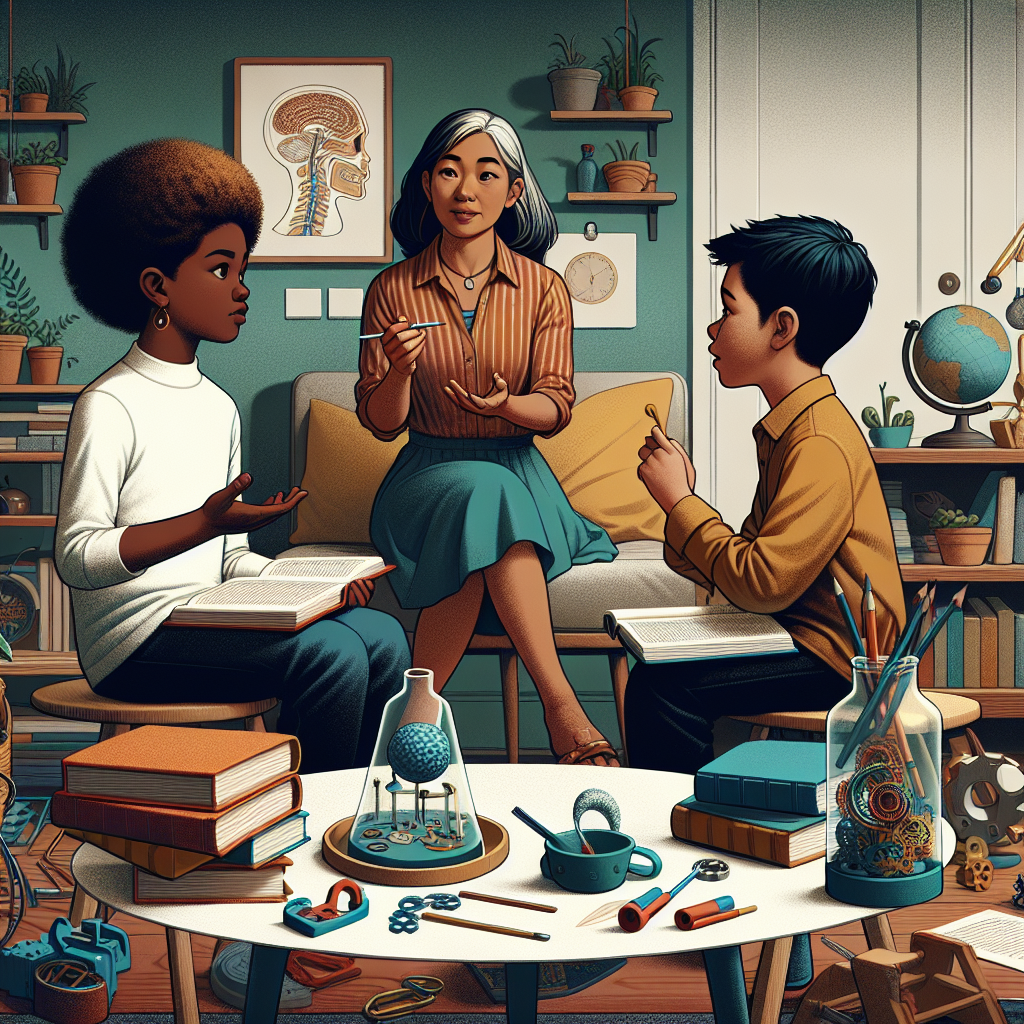
This guide covers curriculum options, lab setup, microscope selection, dissection considerations, and strategies for providing rigorous, college-ready biology education at home.
Curriculum Comparison
Here's an assessment of major biology curriculum options for homeschoolers.
Apologia Biology
Among the most popular homeschool biology options. Conversational writing style reads more like explanation than lecture. Lab instructions are detailed enough for those without prior lab experience. Note: written from a young-earth creationist perspective - works for some families, others supplement with additional perspectives. Cost: approximately $90 for textbook, plus lab supplies.
CK-12 Biology
Free curriculum with interactive simulations helpful for visualizing cell division, DNA replication, and similar processes. Significant limitation: no physical labs included. The curriculum assumes school lab access. Using CK-12 effectively requires supplementing with hands-on lab activities from another source.
OpenStax Biology
Free, college-level textbook excellent for ambitious students targeting AP Biology. Content is dense but thorough. Best suited for students ready for college-level reading who can work independently. Good preparation for pre-med or biology-intensive majors.
AI-Powered Options (including TheHomeschoolingCompany)
AI-powered platforms adapt biology to student interests. A marine biology enthusiast learns through whale migration and coral reef ecology; a future doctor focuses on human anatomy and disease. personalized mentors answer questions at any hour and suggest experiments based on available materials. Subscription-based with internet requirement.
Microscope Selection and Use
A quality microscope transforms biology education. Not toy microscopes that barely function - a real compound microscope with 40x to 1000x magnification. Quality options available in the $100-300 range.
When students observe their own cheek cells at 400x magnification - seeing actual cell membranes and nuclei - cells shift from abstract textbook concept to visible reality. This direct observation creates lasting understanding.
Progression: Start with prepared slides to learn focusing and adjustment. Move to preparing own slides - onion skin cells work well for beginners (thin, easy to prepare). Eventually progress to collecting pond water and cataloging microorganisms.
The Dissection Question
Dissection is not strictly required, but it offers educational value that is difficult to replicate another way. Seeing how a frog's organs fit together, how the heart connects to the circulatory system, and how everything is arranged inside the body can create an understanding that diagrams do not provide.
That said, if traditional dissection isn't right for your family, virtual alternatives have gotten remarkably good. Programs like Froguts and BioDigital Human provide 3D interactive experiences that let you explore anatomy without the formaldehyde smell. Many families use virtual dissections first to learn the anatomy, then do one or two real dissections to develop hands-on lab skills.
If you do choose real dissection, preserved specimens are available from scientific supply companies like Home Science Tools and Carolina Biological. Start with an earthworm - it's simple anatomy and builds confidence. The classic frog dissection teaches vertebrate organ systems beautifully. For students interested in human anatomy, fetal pig is the closest match to human organs at a reasonable price point.
Biology in Your Backyard
Some of the best biology education happens outside the house entirely. Your local ecosystem is a living laboratory waiting to be studied. Bird watching teaches observation and classification. Monitoring a garden through seasons demonstrates plant life cycles and insect ecology. Testing water quality in a local stream introduces environmental science methods.
Citizen science projects let students contribute to real research while learning scientific methods. Programs like eBird, iNaturalist, and Project Budburst connect amateur observers with scientists who use their data. There's something powerful about knowing your observations matter to actual research. It transforms "doing homework" into "contributing to science."
The flexibility of homeschooling means you can take advantage of optimal timing. Visit tide pools at low tide. Go bird watching at dawn when birds are most active. Track seasonal changes as they actually happen rather than reading about them in a textbook months later.
The Human Body: Personal and Practical
For many teens, human biology is the most engaging part of biology curriculum. It's personal - this is their body, after all. Understanding how digestion works, how muscles contract, how the immune system fights infection - this knowledge feels immediately relevant in a way that plant cell structure might not.
Smart biology education connects human physiology to health decisions. Learning about nutrition is more meaningful when students understand how their bodies actually process food. Understanding how diseases spread becomes personally relevant during flu season. The immune system isn't an abstract concept when you can explain why vaccines work or why you feel terrible when you're sick.
For students considering healthcare careers, this foundation is essential. But even students who'll never work in medicine benefit from understanding their own bodies well enough to make informed health decisions throughout their lives.
Molecular Biology: Where It Gets Interesting
DNA, genetics, and biotechnology represent the cutting edge of biology - and also some of the most fascinating content for curious teens. The discovery that DNA carries hereditary information is one of the great scientific stories, and understanding how genes work opens up questions that seem like science fiction but are actually happening in labs right now.
Home experiments in molecular biology are more accessible than you'd think. Extracting DNA from strawberries requires only dish soap, salt, and rubbing alcohol. The result is a white stringy substance that students can actually see and touch - real DNA, pulled from real cells. It's simple but profound.
Understanding genetics also helps students make sense of controversial topics they'll encounter as citizens. What does it actually mean to genetically modify crops? How do mRNA vaccines work? What are the implications of gene editing technology like CRISPR? Biology education should prepare students to think critically about these questions, not just memorize definitions.
Making It Count
For college-bound students, documenting biology education matters. Keep lab notebooks with dated entries describing experiments, observations, and conclusions. Save graded work. Track hours - most states require 120-180 hours for a full credit, and colleges expect at least 30 hours of documented lab work.
Write a course description that includes topics covered, curriculum used, and lab experiences. This goes on the transcript. If you want external validation, the AP Biology exam provides standardized proof of learning. Many homeschoolers self-study for AP Biology using curriculum combined with prep books and practice exams.
Pre-med tracks typically require two years of biology including AP Biology. Even for students not pursuing healthcare, a strong biology foundation opens doors in environmental science, biotechnology, agriculture, and dozens of other fields.